 By Krishna Dua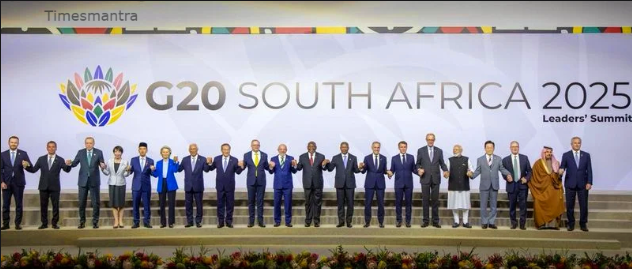
Global South in 2025: Key Challenges Hindering Development
NEW DELHI — In the shadow of a world still reeling from the aftershocks of the COVID-19 pandemic, escalating geopolitical conflicts, and the inexorable march of climate change, the Global South—encompassing over 150 nations from sub-Saharan Africa to Latin America and South Asia—confronts a confluence of crises that threaten to derail its developmental trajectory in 2025. Home to more than 6 billion people and representing 85% of the global population, these countries, which contribute less than 25% of historical carbon emissions, are disproportionately bearing the brunt of a “polycrisis” that has widened inequality gaps, strained fiscal resources, and eroded hard-won gains in poverty reduction. The United Nations Conference on Trade and Development (UNCTAD) estimates that 1.5 billion individuals in low- and middle-income economies risk falling back into extreme poverty this year, a stark reversal from the pre-2020 momentum when the SDGs seemed within reach. This overview dissects the key challenges impeding the Global South’s progress, drawing on data from the World Bank, IMF, and IPCC to illuminate the interlocking barriers—from debt distress and food insecurity to digital divides and democratic backsliding—and explores glimmers of resilience amid the gloom.
The year 2025, once heralded as a pivot toward sustainable recovery, has instead crystallized as a crucible for the Global South, where external shocks amplify internal vulnerabilities. With global growth projected at a tepid 2.7% by the IMF—barely sufficient to outpace population growth in many regions—these nations face a daunting array of hurdles that not only stall development but risk entrenching cycles of underachievement. Brazilian President Luiz Inácio Lula da Silva captured the sentiment at the recent G20 summit in Johannesburg: “The North designs the rules, the South pays the price—it’s time for a new compact.” As African debt burdens reach $1.1 trillion and Latin American inequality sparks social unrest, the challenges are as diverse as the regions they afflict, yet united by a common thread: the urgent need for equitable global governance to forge pathways out of peril.
From Zambia’s sovereign default to Somalia’s famine thresholds and India’s urban heat islands, 2025’s trials test the tenacity of the world’s majority. Yet, innovations in green finance and community resilience offer beacons of hope—if the international community can muster the multilateral might to amplify them.
Debt Dilemma: Crushing Burdens and Creditor Conundrums
The debt dilemma dominates the Global South’s economic ledger in 2025, with external borrowings surging to $12.2 trillion—28% of GDP for low-income countries—according to the World Bank’s International Debt Report. Servicing costs have ballooned to $500 billion annually, devouring 25% of export revenues in sub-Saharan Africa and forcing governments like Ghana and Zambia to slash health budgets by 15% amid IMF-mandated austerity. Zambia’s 2023 default on $18 billion in Eurobonds, the first in Africa since 2020, exemplifies the trap: 65% of its debt held by private creditors like BlackRock, who demand 8% interest rates while China—Zambia’s largest bilateral lender—ties relief to Belt and Road infrastructure concessions. The IMF’s $650 billion SDR allocation in 2021 offered a lifeline, but with $100 billion disbursed to developing nations, it barely covered 2025’s $1 trillion repayment wall, per Jubilee Debt Campaign data.
Conundrums compound: the U.S. Federal Reserve’s rate hikes to 5.25% since 2022 have tripled borrowing costs for dollar-denominated debt, hitting Latin America’s $4.5 trillion load hardest—Argentina’s 2025 hyperinflation at 120% stems from $300 billion in obligations serviced at 10% yields. Geopolitical creditors like China, holding $1 trillion in Global South loans, prioritize strategic assets over humanitarian halts, as seen in Sri Lanka’s 2022 default where Beijing seized Hambantota port. Reforms remain elusive: the G20’s Common Framework for Debt Restructuring, launched in 2020, has restructured just $15 billion for four countries, criticized by Oxfam as “too little, too opaque.” As UNCTAD Secretary-General Rebeca Grynspan warned in her November Geneva address, “Debt is the new colonialism—developing countries pay $400 billion yearly to the North while receiving $150 billion in aid.”
Dilemma’s depth: debt’s drag on SDGs, with 20% of low-income budgets diverted from education and health.
Climate’s Cruel Calculus: Disasters, Displacement, and Development Derailment
Climate’s cruel calculus compounds catastrophe in the Global South, where 2025’s extreme events have displaced 45 million and inflicted $300 billion in damages, per the Global Facility for Disaster Reduction and Recovery (GFDRR). Sub-Saharan Africa’s 2025 “triple drought”—exacerbated by La Niña—has withered 15 million hectares of crops, pushing 25 million into famine per the IPC Phase 5 thresholds. Somalia’s October declaration of famine in Baidoa district, affecting 213,000 people, marks the first since 2011, with 4.3 million acutely food-insecure amid 50% livestock losses from failed rains.
Displacement’s deluge: the IOM’s 2025 Global Trends report tallies 33 million climate migrants, 80% in developing countries—Bangladesh’s 2025 cyclones uprooted 2.5 million from the Sundarbans, where sea levels have risen 20 cm since 2010. Latin America’s 2025 Amazon fires, the worst since 2019, razed 1.2 million hectares in Bolivia and Peru, releasing 500 million tons of CO2 and displacing 100,000 indigenous communities. Development’s derailment: the IPCC’s 2025 Special Report on Cities warns that heatwaves in South Asia—India’s 2025 “killer summer” claiming 1,500 lives—could slash GDP by 2.8% by 2030, with informal workers losing 10% productivity per 1°C rise.
Calculus’s cruelty: Global South’s 0.5% emissions vs. 90% impacts—loss and damage fund at $100 billion pledged in 2023, disbursed $5 billion by 2025.
Health Hazards: Pandemic Hangover, AMR, and Access Abyss
Health hazards haunt the Global South, where COVID-19’s hangover lingers with 2025’s 2 billion unvaccinated in low-income states, per WHO. Hangover’s haze: mpox’s 2025 African surge (5,000 cases, 200 deaths) exposed vaccine apartheid, COVAX’s 2021 shortfall leaving 70% of sub-Saharan Africa unprotected.
AMR’s abyss: antibiotic resistance kills 1.4 million yearly in developing countries (WHO 2025), with 80% misuse in Indian hospitals fueling superbugs like NDM-1. Access’s ache: 3.5 billion lack essential medicines, per MSF, with 2025’s supply chain snags from Ukraine war spiking insulin prices 50% in Latin America.
Hazards’ horizon: 2025’s $15 billion Global Fund shortfall leaves HIV programs underfunded in 45 nations.
Geopolitical Gambits: Conflicts, Sanctions, and Supply Shocks
Gambits geopolitical gambol through Global South, conflicts’ carnage claiming 250,000 lives in 2025 (Uppsala Conflict Data Program). Ukraine’s year four costs Africa $60 billion in grain gluts, Yemen’s Houthi blockade adds 20% to Asian freight.
Sanctions’ snare: U.S. measures on Venezuela and Iran halve their oil, crude at $98/barrel inflating India’s Rs 35,000 crore subsidies. Supply shocks shudder: Taiwan tensions delay 25% of Vietnam’s chips, per ADB.
Gambits’ grind: 2025’s 120 million displaced (UNHCR), 75% in developing lands—conflicts’ collateral, sanctions’ sting.
Tech and Talent Traps: Digital Deserts and Brain Drain Blues
Traps tech and talent tangle, digital deserts denying 2.7 billion internet (ITU 2025), 65% in Global South. Africa’s 38% connectivity lags Asia’s 72%, 600 million youth e-learning deprived (UNESCO).
Brain drain blues: 10 million skilled migrants yearly from developing countries (OECD), India’s 2 million IT diaspora remitting $100 billion but draining domestic talent. Traps’ tangle: AI’s $1.2 trillion market, 92% U.S.-China capture (McKinsey 2025)—South’s data dearth denies dividends.
Talent’s trap: 2025’s $250 billion G20 Digital Compact falls 30% short, brain drain’s blues.
Social Strife: Inequality’s Iron Fist and Youth’s Yoke
Strife social strains, inequality’s iron fist fisting 4.6 billion (Oxfam 2025). Latin America’s Gini 0.49 (top 10% hoard 58% wealth) ignites Brazil’s 2025 favela fury, 600 dead in uprisings. Youth’s yoke: 78 million under 25 jobless (ILO), 65% in Africa—South Africa’s 32% rate sparks #FeesMustFall 2.0.
Strife’s strain: inequality’s inheritance, youth’s yoke of joblessness.
Pathways to Progress: Reforms, Resilience, and Renewed Global Compact
Progress pathways pave reforms, resilience’s rampart. Reforms ripple: IMF’s 2025 Debt-for-Climate Swaps forgive $150 billion for 20 nations, Zambia’s $3 billion relief. Resilience rises: Bangladesh’s 2025 Delta Plan 2100, $25 billion Dutch-funded, shields 25 million from floods.
Renewed compact: G20’s 2025 Global Minimum Tax at 15% for multinationals, $200 billion revenue for South. Pathways’ promise: multilateral mend, South-South synergy—China’s $60 billion FOCAC, India’s $12 billion vaccine vault.
Progress’s promise: challenges’ crucible, compact’s crescendo.