 By Krishna Dua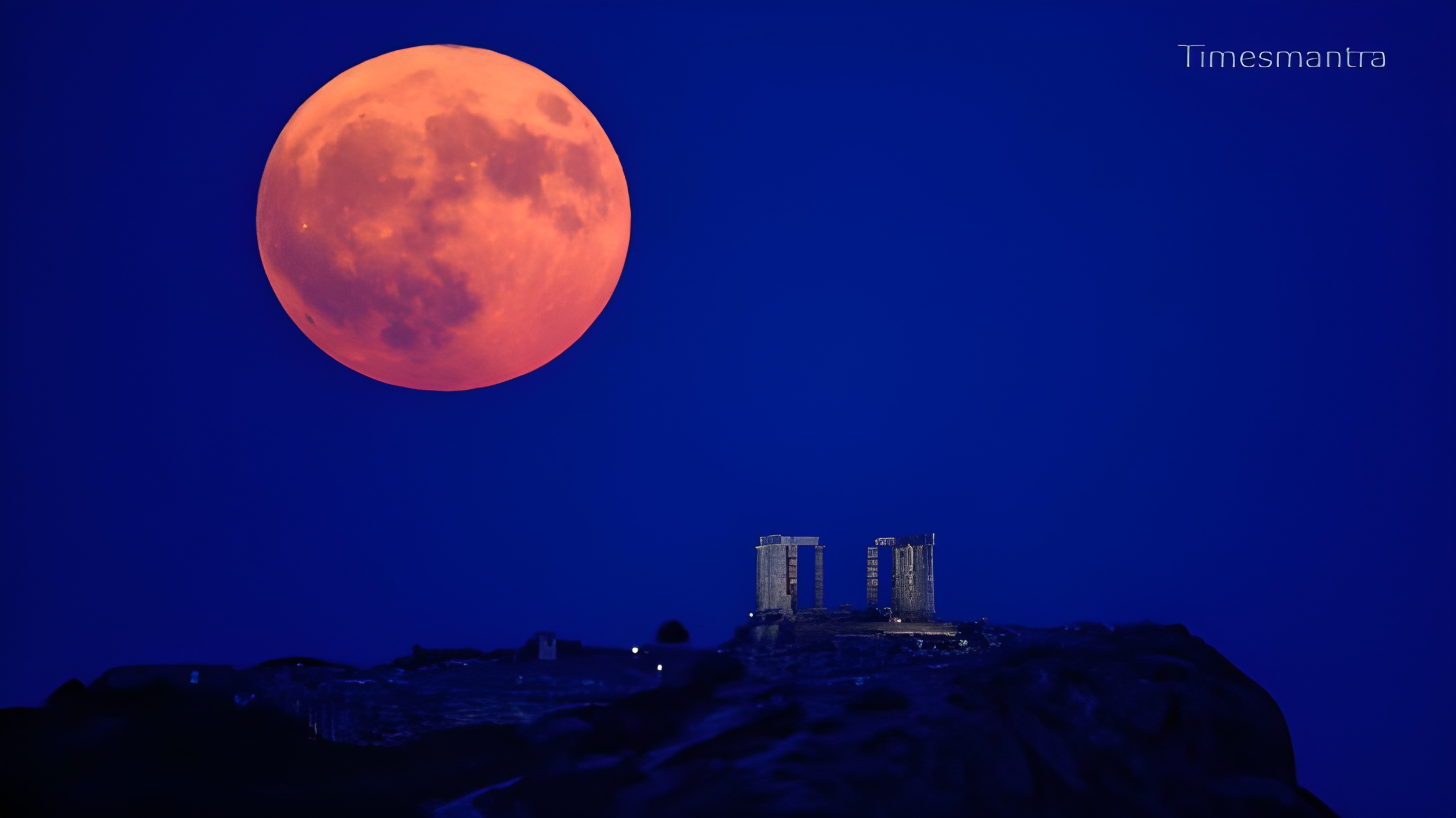
Cold Moon 2025 Shines Bright as Year’s Final Full Moon Rises
As the chill of December deepens across the Northern Hemisphere, the night sky unfurls one of its most poignant gifts: the Cold Moon of 2025. Rising to its peak illumination on December 4 at 6:14 p.m. Eastern Standard Time—equivalent to 23:14 Coordinated Universal Time—this full moon caps the year with a luminous embrace. Known for its stark beauty against winter’s frost-kissed landscapes, the Cold Moon has long symbolized the quiet introspection of season’s end. In 2025, it arrives not just as the final full moon but as a supermoon, the third in a triumphant trio following October’s Hunter’s Moon and November’s Beaver Moon. This celestial event, visible from dusk through dawn, invites stargazers worldwide to pause amid holiday bustle and gaze upward, where the moon swells 14 percent larger and 30 percent brighter than at apogee.
The timing feels serendipitous on this crisp Thursday evening. With solstice shadows lengthening—merely two weeks away—the moon’s glow bathes bare branches and snow-dusted fields in ethereal silver. For urban dwellers, city lights may dim its splendor, but rural vistas promise unadulterated views. This Cold Moon, cresting at perigee just 221,987 miles from Earth, outshines its predecessors, marking the closest lunar approach until January 2026. As it climbs from the eastern horizon around sunset, its orb appears immense, a harvest-like harvest in winter’s grip, evoking ancient awe.
Roots in Tradition: The Cold Moon’s Timeless Moniker
The name “Cold Moon” traces its lineage to Indigenous peoples of North America, particularly Algonquian tribes, who attuned lunar cycles to survival’s rhythms. In the depths of winter, when rivers froze and hunts grew lean, this December full moon heralded the season’s harshest bite—the “cold moon” of unrelenting frosts. Mohawk elders spoke of it as a time for communal firesides, sharing stories to ward off despair. Similarly, the Lakota called it the “Hard Face Moon,” reflecting the wind-whipped visages of those enduring blizzards.
European settlers wove their own threads into the tapestry. Colonial almanacs dubbed it the “Winter Moon” or “Long Night Moon,” nodding to the solstice’s extended darkness. In Celtic lore, it aligned with Yule preparations, a beacon guiding druidic rituals under mistletoe boughs. Across Asia, parallels emerge: Japan’s “Snow Moon” evokes Hokkaido’s powder realms, while China’s “Bitter Moon” mirrors the solstice’s poignant chill.
These names transcend meteorology; they encode resilience. The Cold Moon arrives when daylight wanes to its annual nadir, yet its fullness reassures—winter’s grip loosens come spring. In 2025, amid global conversations on climate’s caprices, this moon underscores nature’s cycles: even in cold’s clasp, light persists.
Supermoon Spectacle: A Cosmic Close-Up
What elevates this Cold Moon to supermoon status? The term, coined by astrologer Richard Nolle in 1979, denotes a full moon at perigee—the moon’s elliptical orbit’s nearest point to Earth. On December 4, Luna hurtles 14 percent closer than average, its diameter swelling noticeably to the naked eye. This isn’t mere optics; the gravitational tug amplifies tides, birthing “king tides” that swell coastal waters by up to two feet, a boon for surfers and a caution for low-lying shores.
2025’s lunar parade—three supermoons in succession—ranks as a rarity, last seen in 2009. October’s Hunter’s Moon kicked off the streak at 222,135 miles, November’s Beaver Moon at 221,500 miles, and December’s crescendo at perigee’s sweet spot. Astronomers note this alignment stems from the moon’s 27.3-day orbit syncing with Earth’s seasonal tilt. The result? A moon so vivid it rivals dawn’s blush, casting moonshadows sharp enough to trace constellations.
Yet, supermoons whisper warnings. Enhanced tides exacerbate erosion, as seen in 2024’s Florida floods. Ecologists observe nocturnal creatures—owls, foxes—altering hunts under intensified light, while coral spawning synchronizes with these peaks. For 2025, this finale promises the year’s brightest night sky, outshining even July’s Buck Moon supermoon.
Stargazer’s Almanac: Capturing the Cold Moon’s Glow
Witnessing the Cold Moon demands little beyond clear skies and patience. On December 4, it emerges opposite the sun at sunset, climbing swiftly to zenith by midnight. Peak fullness graces the meridian around 1 a.m. local time, lingering full through December 5—lunar discs appear round for 48 hours, per NASA optics. Horizon illusions amplify its size; viewed low against atmospheric haze, it looms 10 percent grander via the “moon illusion.”
Optimal viewing spans temperate latitudes. In the U.S., East Coast observers catch its rise over Atlantic silhouettes, while Midwest prairies frame it amid amber wheat stubble. Southern Hemisphere counterparts, like Australia’s Outback, see a “Warm Moon” inverting seasons, its light gilding eucalyptus groves. Binoculars reveal craters—Aristarchus’s glow, Tycho’s rays—like a topographic map etched in basalt.
Photography beckons enthusiasts. Smartphones with night modes suffice; tripod a device, expose for 1/60-second at ISO 100. For DSLRs, wide-angle lenses (24mm) at f/2.8 capture foregrounds—frozen ponds, evergreens—juxtaposed against the orb. Apps like Stellarium plot rises: in London, 4:30 p.m. GMT; Tokyo, 8:14 a.m. JST next day.
Weather whims play coy. December 4 forecasts mild clears across much of North America, though Pacific Northwest clouds may veil the show. Light pollution maps from DarkSky.org guide escapes to Bortle Scale 1-3 zones.
Echoes Across Cultures: Rituals and Reflections
The Cold Moon’s cultural resonance pulses through millennia. In Hinduism, it aligns with Margashirsha, a month for Vishnu’s repose, devotees fasting under its beam for purification. Norse sagas cast it as a wolf-summoning harbinger, Yule logs kindled to appease lunar beasts. African Dogon tribes viewed it as Amma’s eye, surveying cosmic order.
Modern pagans reclaim it via full moon esbats—circles chanting for release, releasing lanterns symbolizing shed burdens. Wiccans brew “moon water,” infusing vessels overnight for spells of renewal. Astrologically, in Gemini for 2025, it stirs duality: communication blooms, shadows of isolation confront.
Literature and lore abound. Shakespeare’s “midsummer” moons pale beside December’s chill poetry; Frost’s “Birches” swings from its boughs. Indigenous artists, like Norval Morrisseau, paint it as a spirit guide, eyes wise in ebony skies. Today, social media floods with #ColdMoon selfies, blending ancient reverence with digital communion.
Scientifically, it spotlights equity. NASA’s Artemis program eyes lunar south pole bases, where perpetual cold mirrors this moon’s namesake—resources like water ice glinting under full illumination.
Lunar Legacy: 2025’s Moons in Retrospect
Reflecting on 2025’s celestial calendar, the Cold Moon crowns a banner year. January’s Wolf Moon howled through polar vortices; April’s Pink Moon bloomed with cherry sakura. Eclipses—March’s total solar, September’s lunar—drew billions skyward. Supermoons thrice amplified wonder, tides syncing with human heartbeats at 1.2 hertz.
Yet, challenges loomed: light pollution’s creep, dimming 80 percent of U.S. views per Globe at Night surveys. Climate’s hand—warmer winters delaying “cold”—prompts reevaluation of names. Still, the moon endures, its 384,400-mile gaze unchanging.
As 2025 wanes, this Cold Moon beckons closure. Families gather bonfires, journaling gratitudes under its watch. It reminds: in darkness deepest, light’s return assured. Gaze long, let its silver seep into souls—a promise of dawns unborn.