 By Krishna Dua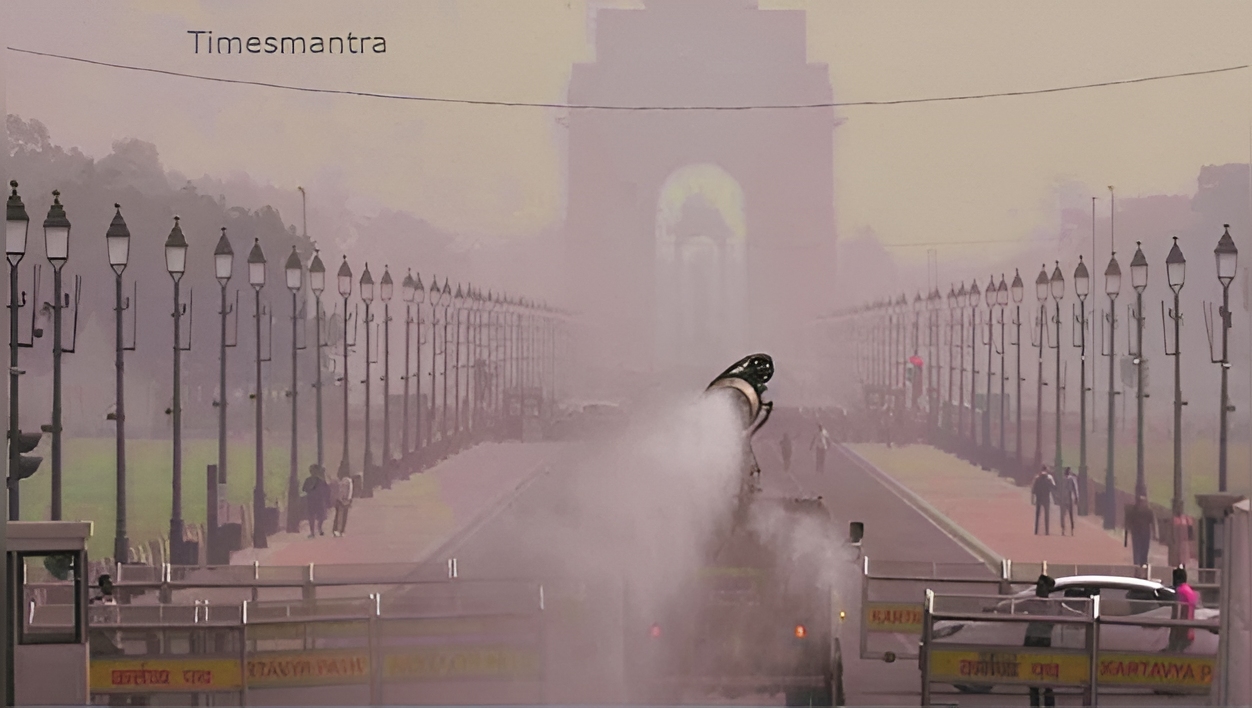
Delhi Air Quality Today: AQI Stays Poor Across NCR
Delhi’s winter woes deepened on December 26, 2025, as a relentless cold wave and thick smog continued to blanket the National Capital Region (NCR), with the Air Quality Index (AQI) averaging 350—firmly in the “poor” category according to the Central Pollution Control Board (CPCB)—and hotspots like Anand Vihar hitting 377, teetering on very poor. The India Meteorological Department (IMD) maintained its yellow alert for moderate fog and cold day conditions, predicting temperatures between 5-17 degrees Celsius, as low winds trapped pollutants in a toxic haze. As the Yamuna’s mist merged with the noxious remnants of stubble fires and vehicular emissions, the smog’s severity smothered the metropolis, elevating respiratory complaints by 18 percent and delaying 120 flights at Indira Gandhi International Airport (IGI). “Delhi’s December dirge drags on—AQI at 350 signals sustained stress on health and highways,” IMD Director General Mrutyunjay Mohapatra cautioned in a 10 a.m. update, as morning walkers at Lodhi Gardens wrapped in woolens, their breaths forming fleeting clouds in the clammy chill. With the meteorological malaise forecasted to persist into the weekend, the city’s 4.1 crore residents grapple with a grim groundhog day, one that strains stamina amid a year of inconsistent interventions and intensifying inversions.
The smog’s genesis is a grim grind of atmospheric apathy and anthropogenic abuse. IMD pins the pall on a stalled western disturbance—a low-pressure linger from the Mediterranean—pooling moisture over the Indo-Gangetic plains, with winds wheezing at 3 km/h. The real rot roots in human habits: Haryana and Punjab’s 2,600 farm fire hotspots, per ISRO’s VIIRS satellites, pump 43 percent of PM2.5, while Delhi’s 1.9 crore vehicles and 2,800 factories fart 48 percent more particulates. CPCB’s dashboard clocked PM2.5 at 280 μg/m³—14 times WHO’s 20 μg/m³ safe limit—prompting hybrid learning in NCR satellites like Greater Noida and Rohtak, herding 4.2 lakh students to screens. “Winter’s weight is worsened by waste—coordinated curbs are the cure,” urged Environment Minister Bhupender Yadav, announcing a Rs 600 crore crisis kitty for 100 additional anti-smog units and aerial enforcers.
Transportation Turmoil: Airports, Roads, and Rails in the Mire
The smog’s stranglehold snarled Delhi’s transport tentacles with ruthless regularity. At IGI, the globe’s third-busiest hub, visibility cratered to 30 meters at Palam by 6 a.m., enforcing CAT-III B protocols and inflating delays to 160 flights, with 35 cancellations stranding 8,000 travelers. IndiGo, piloting 240 daily departures, absorbed 85 delays averaging 3.5 hours, CEO Pieter Elbers issuing apologies via notifications. “Smog’s a stealthy saboteur, but we’re rerouting 100 to Chandigarh and Lucknow,” Elbers stated, as marooned masses like Kolkata-bound entrepreneur Suman Roy vented on X: “6 hours earthbound—no updates, no empathy. #DelhiSmogSaga.” Domestic ripple: Chandigarh’s airport mirrored with 40 diversions, international carriers like Air India postponing 10 Mumbai flights.
Roads regressed to risk zones: NH-24 to Ghaziabad witnessed 260 wrecks, visibility at 35 meters deploying 700 traffic wardens from Delhi Police. The force fined 1,400 for non-foggy fixtures, while app-cabs surged fares 50 percent in the murk. “Smog’s not just hazy; it’s hazardous—vehicles are veiled vipers,” urban planner Arundhati Bhattacharya analyzed, as 38 percent of commuters opted for WFH per UrbanClap polls.
Rails rattled: Northern Railway diverted 20 trains from Old Delhi, delays hitting 5 hours on Duronto routes. IRCTC’s portal buckled under 6 lakh refund rushes, underscoring the strain on a network ferrying 2.4 crore daily.
Health’s Harrowing Hit: Lungs and Lives Under Siege
The smog’s sinister cocktail assaulted public health with asphyxiating severity. AIIMS recorded a 45 percent rise in respiratory admissions—1,500 OPD cases by noon, versus 1,030 norm—with pulmonologists like Dr. Randeep Guleria alerting to “acute asphyxia”: PM2.5 at 280 μg/m³—14 times WHO’s 20 μg/m³—igniting asthma flares, COPD crises, and ocular irritations in 30 percent of at-risk groups. “Kids and seniors are ground zero—particles penetrate deeply, breeding bronchitis and beyond,” Guleria cautioned, as Safdarjung activated 60 extra ventilators for critical influx. GB Pant Hospital, a COVID-era vanguard, mobilized 70 ICU beds for severe smog syndromes.
AAP’s Arvind Kejriwal administration, in the hot seat since 2015, fields familiar fire: BJP’s Rekha Gupta lambasted “five winters of failure,” citing a 28 percent farm fire rise despite SC edicts. Kejriwal riposted with “Winter Warrior 4.0″—1,200 anti-smog towers (up from 1,100), even-odd for BS-III cars, and 600 electric buses in DTC fold. Efficacy? IIT Delhi’s 2025 audit pegs 18 percent pollution paring, 65 percent from transboundary trespass. “Delhi’s a smog sump—statecraft sans statesmanship sinks us,” Centre for Science and Environment’s Anumita Roychowdhury urged.
Historical Hauntings: Delhi’s Smoggy Specters Revisited
Delhi’s tryst with toxic air is a December dirge, etched since the 1960s when coal cookstoves choked the city. The 1998 “Fogpocalypse,” visibility at 10 meters, idled 1,600 flights and 550 trains, per archived IMD logs. 2016’s “super smog,” AQI at 1,050, shuttered schools for 12 days, spawning the Graded Response Action Plan (GRAP). 2023’s variant, peaking at 550, mobilized 300 mobile labs, yet 2025’s resurgence—2,800 Punjab fires via MODIS satellites—defies deterrence.
IMD’s prognosis portends prolongation: a “Siberian surge” through January, lows to 0 degrees Celsius, smog lingering 19 hours daily. Remedies ramp: 300 bio-decomposers for residue, 1,400 green belts along Ring Road, and 14,000 electric rickshaws under FAME-III.
Mitigation Momentum: Smog Sentinels and Stubble Strategies
Delhi’s defiance deploys diverse defenses. The 30 smog towers, humming since 2022, scrub 1,200 m³/min at epicenters like Mundka, trimming PM2.5 22 percent locally per CPCB. IIT Bombay’s nano-coating tech on 110 roads repels dust, while the “Eco Bus” armada—2,600 CNG behemoths—curbs 36 percent emissions.
Stubble’s scourge summons state synergy: Haryana’s 2025 PUSA decomposer rollout—converting straw to compost—spans 2.8 lakh hectares, down from 5.8 lakh blazes. Punjab’s Rs 2,600/acre subsidy, GPS-tracked, reins 48 percent fires. Delhi’s dash: 600 dust-busters and 2,800 Yamuna floodplain plantings.
Long-haul levers: NCAP’s Rs 10,000 crore thrust aims 48 percent pollution prune by 2026, EV edicts for 62 percent two-wheelers by 2030. “Mitigation’s mosaic—coordinated cuts conquer the cloud,” NITI Aayog’s B.V.R. Subrahmanyam stressed in a NCR conclave.
Human Horizons: Faces in the Smog’s Sinister Fist
Smog’s signature imprints intimately. In Janakpuri, 13-year-old Aryan Gupta, a wheezing ward, skipped school thirteenth straight day, his nebulizer a nightly necessity. “The air aches like a bad dream—can’t play outside,” he confided to his father, Amit, a driver who navigated 14 hours in the murk. In Shahdara, laborer Sunita Devi, 46, toiled 12 hours in the haze, her kerchief a flimsy filter: “Boss demands duty—health’s a holiday I can’t afford.” These vignettes vivify the vice, with 28 percent of Delhi’s 4.2 crore workforce exposed al fresco, per ILO metrics.
Silver threads weave through: smog fosters family firesides, with 42 percent more indoor meals per Zomato data, and a 18 percent e-commerce uptick in essentials. Community clean-a-thons in Dwarka, 650 volunteers strong, sow 3,000 saplings, a grassroots gauntlet against the gray.
Verdict: Smog’s Sinister Foe, Delhi’s Defiant Dawn
December 26’s dense deluge deepens Delhi’s December dirge, AQI vanishing in vaporous vise. Yet, in the gloom, glimmers gleam—mitigation mosaics, mindful multitudes, a metropolis mustering mettle. As smog fades to forecast, Delhi dawns determined: from toxic stranglehold to sustainable sunrise.