 By Krishna Dua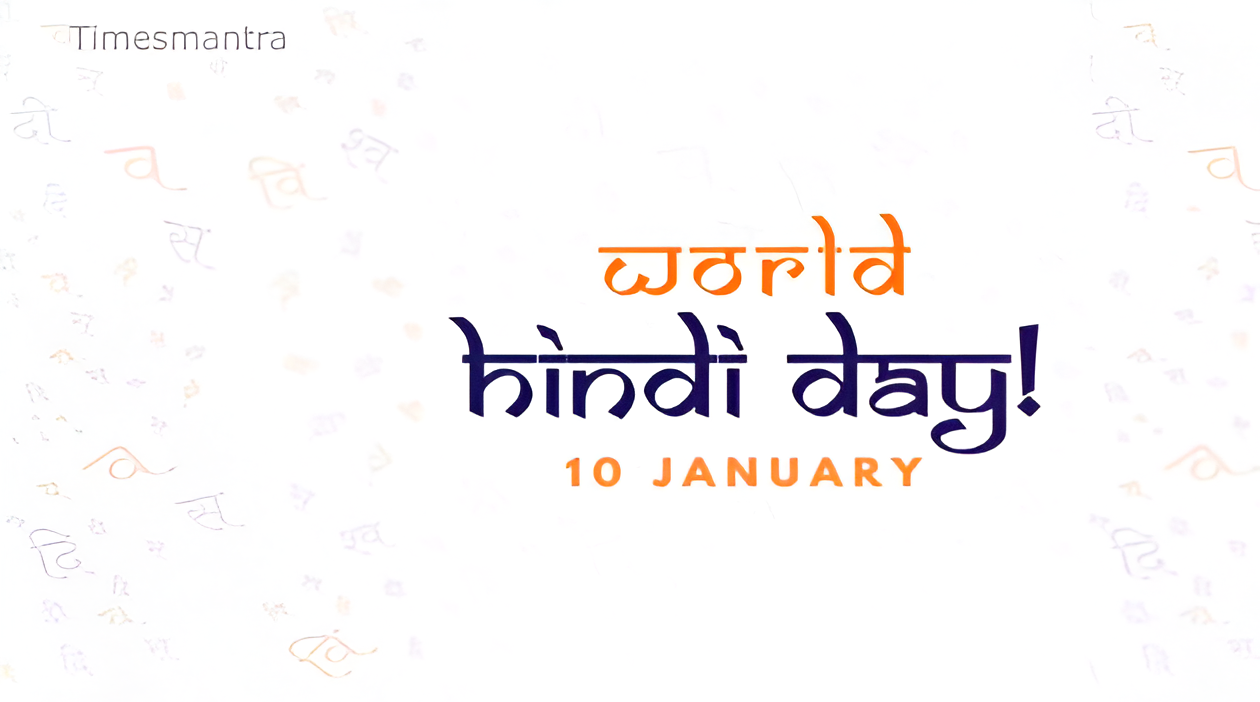
World Hindi Day 2026: Honouring Hindi’s Global Influence
On January 10, 2026, the world pauses to celebrate World Hindi Day, a vibrant tribute to the language that binds over 600 million hearts across continents, weaving tales of resilience, romance, and revolution. This annual observance, instituted in 2006 by the Indian Ministry of External Affairs, commemorates the historic moment in 1949 when Hindi first resonated in the United Nations General Assembly, championed by India’s delegate Lakshmi Kant Maitra. In 2026, themed “Hindi: A Bridge to Tomorrow,” the day underscores the language’s exponential global footprint—from Bollywood’s billion-dollar diaspora to digital realms where Hindi algorithms power AI conversations. Spoken by 345 million native users and 264 million as a second language, per Ethnologue’s 2025 estimates, Hindi ranks third worldwide, trailing only Mandarin and English. As Prime Minister Narendra Modi notes in his annual address, “Hindi is not merely words; it’s the soul of our shared heritage.” From New York’s Times Square illuminations to Delhi’s Rashtrapati Bhavan poetry recitals, festivities blend tradition with innovation, honoring icons like Kabir and Premchand while spotlighting youth-driven apps translating Hindi into 100 tongues. In an era of linguistic erosion, World Hindi Day 2026 reaffirms Hindi’s role as a cultural diplomat, fostering unity in diversity and propelling India’s soft power on the world stage.
Historical Milestones: From Ancient Roots to UN Echoes
Hindi’s odyssey spans millennia, evolving from Vedic Sanskrit’s Prakrit offshoots in the 7th century to a vibrant vernacular under Mughal patronage. The 19th-century Hindi-Urdu schism, sparked by British colonial policies, birthed Khari Boli Hindi, standardized by poets like Bharatendu Harishchandra, who lamented “Bharat Durdasha” in 1875. Post-Independence, the 1963 Official Languages Act enshrined Hindi alongside English, navigating southern resistances to become India’s lingua franca.
World Hindi Day’s spark ignites in 1949: Lakshmi Kant Maitra’s impassioned UN plea—”Hindi embodies the aspirations of 300 million Indians”—secured its place in proceedings, a triumph for decolonized voices. This paved the way for Hindi’s official UN recognition in 2011, with sessions occasionally conducted in Devanagari. Early champions included Mahatma Gandhi, who envisioned Hindi as a “rashtrabhasha” uniting provinces, and poet Maithili Sharan Gupt, whose Bharat-Bharati (1912) fused nationalism with verse.
By the 1970s, Doordarshan’s Ramayan and Mahabharat serialized epics for 500 million viewers, embedding Hindi in national consciousness. The 1990s diaspora boom—1.5 million Indians migrating annually—carried it to Gulf shores and Silicon Valley, where Hindi coding bootcamps thrive. In 2026, as India marks 75 years of the Republic, the day honors this arc, with ICCR’s global Hindi chairs—at 35 universities from Harvard to Hanoi—nurturing the flame.
Global Diaspora: Hindi’s Transnational Tapestry
Hindi’s 2026 spotlight falls on its diaspora symphony, spoken by 18 million overseas Indians and their descendants. In Fiji, where 37% trace Indo-Fijian roots to 1879 girmit laborers, Hindi-Bhojpuri hybrids flavor Suva’s Diwali fairs, with radio stations broadcasting Tulsidas recitals. Mauritius, home to 600,000 of Indo-Mauritian heritage, hosts beachside kavi sammelans blending Hindi with Creole, celebrating poet Sookdeo Rambhajan.
The Caribbean pulses with Hindi rhythms: Guyana’s 300,000 Indo-Guyanese revive Bhajans at Phagwah festivals, while Trinidad’s chutney-soca fuses it with calypso. In the UAE, 3.5 million Indians tune into All India Radio’s Hindi broadcasts, powering Dubai’s Bollywood brunches. The US’s 4 million South Asians, per 2025 Census, drive Hindi’s Silicon Valley surge—Google’s Paheli AI chatbot handles 50 million Hindi queries monthly.
Africa’s Hindi heartbeat beats in South Africa’s Durban, where Gandhi’s Phoenix Settlement echoes with bhajans, and Kenya’s 100,000 Indians host Nairobi’s Hindi film fests. Challenges abound: generational shifts erode fluency (only 40% diaspora youth proficient, per 2025 ICCR survey), yet apps like Duolingo’s Hindi course—launched 2024—boast 10 million downloads. Hindi’s global GDP contribution, via Bollywood’s $2.8 billion exports, cements its economic clout, with 2025’s Chandu Champion grossing ₹120 crore overseas.
2026 Celebrations: A Fusion of Tradition and Tech
World Hindi Day 2026 erupts in a kaleidoscope of events, orchestrated by MEA and Sahitya Akademi. Delhi’s India Habitat Centre hosts a dawn kavi sammelan at 6 AM, with 500 poets invoking Kabir’s dohas under LED-lit canopies. President Droupadi Murmu’s 11 AM address from Rashtrapati Bhavan, broadcast on DD India, unveils the “Hindi Sankalp 2030” initiative—digitizing 50,000 manuscripts for global access.
Mumbai’s Juhu Beach dazzles with a midnight flash mob of 2,000 dancers to A.R. Rahman’s Hindi tracks, projected on Marine Drive. Kolkata’s ICCR auditorium features a Hindi-Bengali fusion play on Tagore’s Kabuliwala, drawing 1,000. Southern vibrancy shines: Chennai’s Anna Centenary Library hosts a Tamil-Hindi translation workshop, while Bengaluru’s IISc demos Hindi AI for 500 students.
Diaspora dazzles: New York’s Carnegie Hall stages a “Hindi Harmonies” concert with Shubha Mudgal, while Toronto’s Scotiabank Arena screens RRR in Hindi for 5,000. Fiji’s Lautoka mela revives girmit songs, and Mauritius’ Grand Bassin lake hosts a Ganga immersion with Hindi chants. Virtual realms thrive: Meta’s VR “Hindi Horizon” metaverse hosts 100,000 avatars in a global poetry slam.
Youth innovation peaks: IIT Kanpur’s hackathon yields a Hindi voice assistant for 10 dialects, while NSD Delhi’s theater fest dramatizes Geetanjali Shree’s Tomb of Sand. Awards honor: Sahitya Akademi Fellowship to Alka Saraogi, and Yuva Puraskar to 30 under-30 scribes.
Literary Luminaries: From Kabir to Contemporary Voices
Hindi’s literary cosmos illuminates 2026: Kabir’s 15th-century weavers’ wisdom—”Bura jo dekhan main chala…”—fuels interfaith dialogues at UN vigils. Tulsidas’s Ramcharitmanas (1574) inspires graphic novels, with Amar Chitra Katha’s 2025 edition hitting 1 million sales. Premchand’s Godaan (1936), translated into 50 languages, anchors rural reform panels, while Mahadevi Varma’s feminism echoes in #HindiMeToo slams.
Modern beacons shine: Uday Prakash’s Dalit dystopias like Mohandas (2004) spark debates on caste in AI ethics forums. Anamika’s Tokri Mein Digant (2020) blends mythology with migration, earning the 2025 Jnanpith. Digital lit surges: Pratilipi app’s 50 million Hindi stories, with serialized thrillers like Sheher-e-Noor rivaling Wattpad English.
Publishing booms: Rajkamal’s 6,000 Hindi titles in 2025, up 25%, signal resurgence, though gender gaps persist (35% women authors).
Challenges Ahead: Safeguarding Hindi’s Soul
Hindi confronts globalization’s gales: Hinglish dominates 70% urban speech (2025 Lok Survey), diluting purity, while English’s job-market hegemony sidelines 500 million Hindi-only speakers. Digital deserts exclude rural dialects—Braj, Awadhi— with only 20% online content in Hindi.
Revival roadmaps: NEP 2020’s three-language formula mandates Hindi in non-Hindi states, while BhashaNet’s 2026 rollout equips 2 billion devices with Hindi input. UN advocacy eyes official status by 2030, lobbied by India. Linguists like Rahul Deo urge “evolution, not erosion,” blending with tech without betrayal.
Conclusion
World Hindi Day 2026, from Maitra’s UN spark to Modi’s digital dreams, honors a language that dances across divides—poet, patriot, powerhouse. Its global influence, from Fijian farms to Fandango screens, weaves humanity’s warp. As verses unite and visions inspire, Hindi beckons: speak it, sing it, save it. In 2026’s babel, its melody matters most—eternal, embracing, ever-evolving.