 By Krishna Dua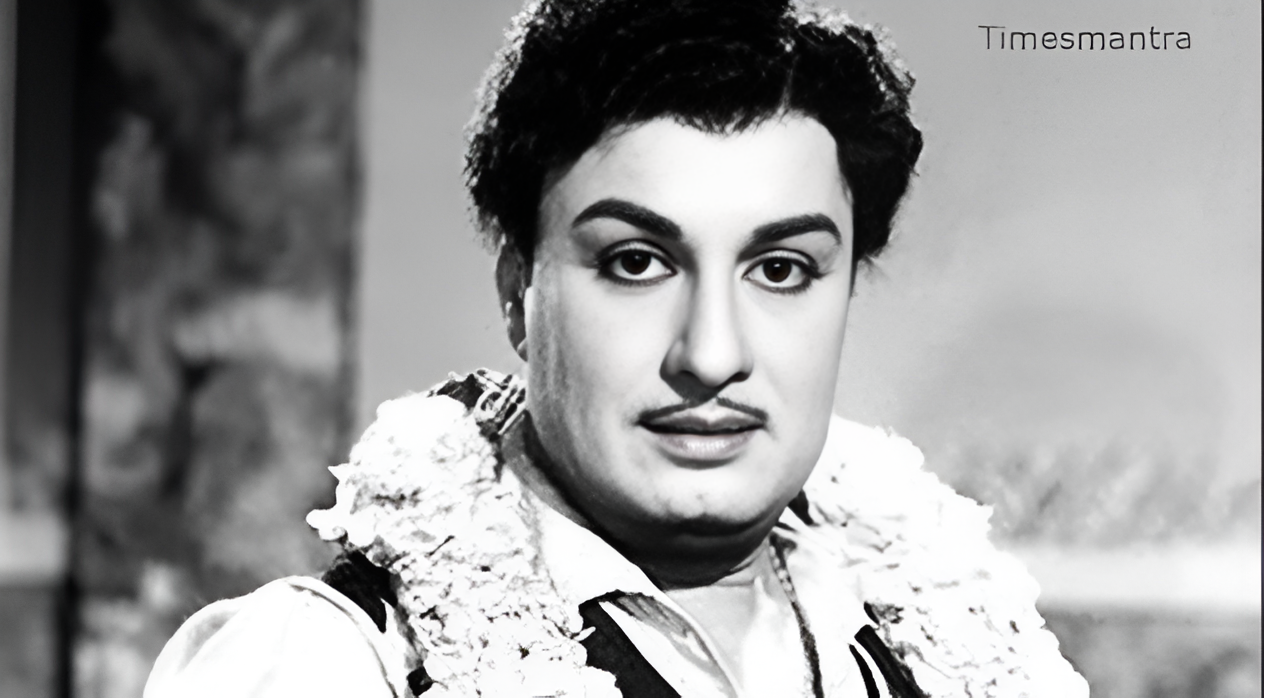
MGR Birthday Today: Nation Remembers His Iconic Legacy
January 17, 2026, brings a wave of nostalgia and reverence across India, particularly in Tamil Nadu, as the nation commemorates the 109th birth anniversary of Maruthur Gopalan Ramachandran, the eternal MGR. Born in 1917 in Kandy, Sri Lanka, to a modest family, MGR rose from the silver screen’s shadows to become a political colossus, embodying the dreams of the common man. In Chennai’s humid dawn, devotees flock to his statue at Marina Beach, laying garlands and chanting “En Selvan MGR,” while statewide events—from school elocutions to AIADMK rallies—honor the man whose life blurred the lines between reel heroism and real governance. As digital archives revive his black-and-white classics on platforms like Sun NXT, younger Indians discover the charisma that made MGR a synonym for selfless service. In 2026, amid economic recoveries and cultural revivals, his legacy shines as a beacon of equity and resilience, reminding us why one man’s journey still stirs a billion hearts.
Humble Origins: Seeds of Stardom in Adversity
MGR’s story began far from Tamil Nadu’s political arenas, in the misty hills of Kandy, Ceylon. The youngest son of Maruthur Gopalan Menon, a court clerk, and his wife Sathammai, young Ramachandran faced tragedy early—his father’s death in 1920 left the family destitute. Widowed and determined, Sathammai relocated to Palakkad, Kerala, then to Madras in 1929, scraping by with tailoring and small trades. MGR, then 12, shouldered responsibilities, selling cigarettes on trains and performing in local dramas to support his mother and siblings, brothers Chakrapani and Madhavan.
His tryst with theater ignited at age eight in Pandava Sabha, a role that showcased his innate charisma. By 1935, at 18, MGR stepped into cinema as an extra in Sathi Leelavathi, directed by the visionary H.M. Reddy. But it was 1936’s Siva Rajeswara Griham that gave him his first speaking part—a minor thief—hinting at the magnetic presence that would define his career. The 1940s under Ellis R. Duncan molded him further; films like Mana Desam (1940) and Rajakumari (1947) transformed the lanky youth into a swashbuckling hero. MGR’s athletic build, baritone voice, and unerring sense of justice resonated in post-colonial India, where audiences craved icons of moral triumph. By 1948, as a leading man in Mohini, he had arrived, his salary rivaling legends like M.K. Thyagaraja Bhagavathar. These formative years, marked by Sathammai’s unyielding faith, instilled in MGR a lifelong ethos: success as a tool for upliftment, not ostentation.
Silver Screen Sovereign: Crafting Myths and Masses
The 1950s catapulted MGR into Tamil cinema’s pantheon, a era when studios like Jupiter Pictures churned folklore into folklore. Over 150 films, he wasn’t just an actor—he was an architect of aspiration. Hits like Alibabavum 40 Thirudargalum (1956) and Madurai Veeran (1956) blended folklore with social commentary, portraying MGR as the rural everyman battling zamindars and fate. His production house, Sathya Studios (founded 1954), democratized filmmaking, allowing him to infuse scripts with Dravidian ideals of equality, influenced by Periyar E.V. Ramasamy.
MGR’s on-screen template—the white-clad savior with a whistle for justice—became cultural shorthand. Songs, penned by poets like Kannadasan and scored by C. Ramchandra, were anthems: “Aayiram Nilave Vaa” from Anbe Vaa (1966) still sways wedding mandaps. Collaborations with heroines like Bhanumathi and Jayalalithaa (in Aayirathil Oruvan, 1965) sparked tabloid frenzy, though MGR’s three marriages—to Thangamani (1943), Sathya (1957), and V.N. Janaki (1963)—grounded his public image in fidelity. Box-office dominance peaked with Enga Veettu Pillai (1965), running 250 days, funding fan clubs that evolved into political cells. By the 1970s, health niggles sidelined him, but his final film, Adimai Penn (1969), cemented the myth: MGR, the invincible Puratchi Thalaivar. In 2026, as Kollywood navigates AI remakes, MGR’s originals—streamed in 4K restorations—remind filmmakers of storytelling’s soul.
Political Odyssey: From Fanfare to Formation
MGR’s political baptism came in 1953, joining C.N. Annadurai’s Dravida Munnetra Kazhagam (DMK) during its anti-Brahmin, rationalist surge. His star power amplified the party’s 1962 assembly win, with MGR scripting propaganda films like Nam Nadu (1969). Elected MLA from St. Thomas Mount in 1967, he rose to treasurer, but ego clashes—exacerbated by M. Karunanidhi’s ascent—fractured ties. A 1971 assault, allegedly DMK-orchestrated, left him hospitalized, his eye bandaged in iconic photos that symbolized betrayal.
Unyielding, MGR launched the All India Anna Dravida Munnetra Kazhagam (AIADMK) on October 17, 1972, in a Chennai school hall, vowing Annadurai’s unfinished social justice. The 1977 elections were his Avvai Shanmugi climax: AIADMK’s 130-seat sweep ousted DMK, installing MGR as Chief Minister on June 30. Sworn in a simple veshti, he declared, “I am but a servant of the people.” Re-elected in 1980 (137 seats) and 1984 (132 seats), his tenure spanned 10 years, marred only by a 1984 stroke that confined him to wheelchairs yet didn’t dim his resolve.
Administrative Alchemy: Welfare Wizardry Redefined
MGR’s governance was populist poetry—policies that scripted Tamil Nadu’s socio-economic renaissance. The 1982 Nutritious Noon Meal Scheme, birthing free school lunches, rocketed enrollment by 40%, curbing child labor and malnutrition; today, it feeds 80 lakh students daily, a UNESCO-cited model. Agrarian reforms via the Moonu Nellu Thittam (Three-Acre Scheme) distributed land to 50,000 small farmers, while the Chief Minister’s Relief Fund disbursed aid without red tape—over Rs 100 crore by 1987.
Infrastructure flourished: rural roads quadrupled, electrification hit 95% villages, and the 1983 Milk Mission echoed Amul’s success, empowering cooperatives. Women’s empowerment? The Ladki Bahin scheme’s precursor provided dowry aid, fostering self-reliance. Controversies lingered—charges of cronyism in allotments, a 1980 finance scandal quashed by courts—but MGR’s frugality (no bungalows, just a Kodambakkam home) and accessibility (public darbars thrice weekly) fortified his halo. The Cauvery pact negotiations showcased statesmanship, balancing federalism with regional pride. Even bedridden post-1984, his 1985 budget speech—delivered via aide—prioritized education, lifting literacy from 46% to 62%. MGR’s administration wasn’t flawless, but its equity ethos endures, influencing schemes like PM-KISAN.
Philanthropic Pulse: Heartbeat of the Masses
MGR’s benevolence predated politics, rooted in Sathammai’s sacrifices. His MGR Medical Assistance Trust (1970s) subsidized treatments for 10 lakh patients, while during shoots, he’d anonymously fund village tanks or orphanages. Post-1977, state coffers amplified this: free textbooks, uniforms, and bus passes for students; eye camps treating millions. The Uzhavar Sandhai (farmers’ markets) cut middlemen, boosting rural incomes by 20%.
Personally, MGR adopted causes quietly—his will endowed Rs 5 crore to charities, including Avvai Illam for widows. In 2026, as India battles inequality, the MGR University of Health Sciences in Chennai—renamed 1988—trains 50,000 medics yearly, a living tribute. His mantra, “Yaadhum Oore Yaavarum Kelir” (All towns are ours, all people kin), inspired global Tamils, from Silicon Valley fundraisers to Colombo memorials.
Timeless Tribute: MGR in Modern Memory
Decades after his December 24, 1987, passing—mourned by 2 crore at the funeral, triggering state-wide shutdowns—MGR’s imprint is indelible. AIADMK’s two-leaves emblem sways elections; Jayalalithaa, his protégé, echoed his welfare in the 1990s, while Edappadi K. Palaniswami invokes him in 2026 budgets. Statues proliferate—over 200 in Tamil Nadu— and his birthplace in Kandy hosts annual vigils.
Culturally, MGR’s films gross Rs 500 crore in 2025 re-releases alone, analyzed in IIT theses for propaganda mechanics. Politically incorrect? His Dravidian purism alienated minorities at times, yet his inclusivity—appointing Dalit ministers—challenged it. In 2026’s polarized India, MGR’s legacy cautions against division, urging unity via upliftment. As holograms project his speeches at Chennai’s MGR Memorial, and schoolkids recite Ulagam Sutrum Valiban dialogues, the nation remembers: MGR wasn’t a leader; he was the people’s poem, etched eternally.