 By Krishna Dua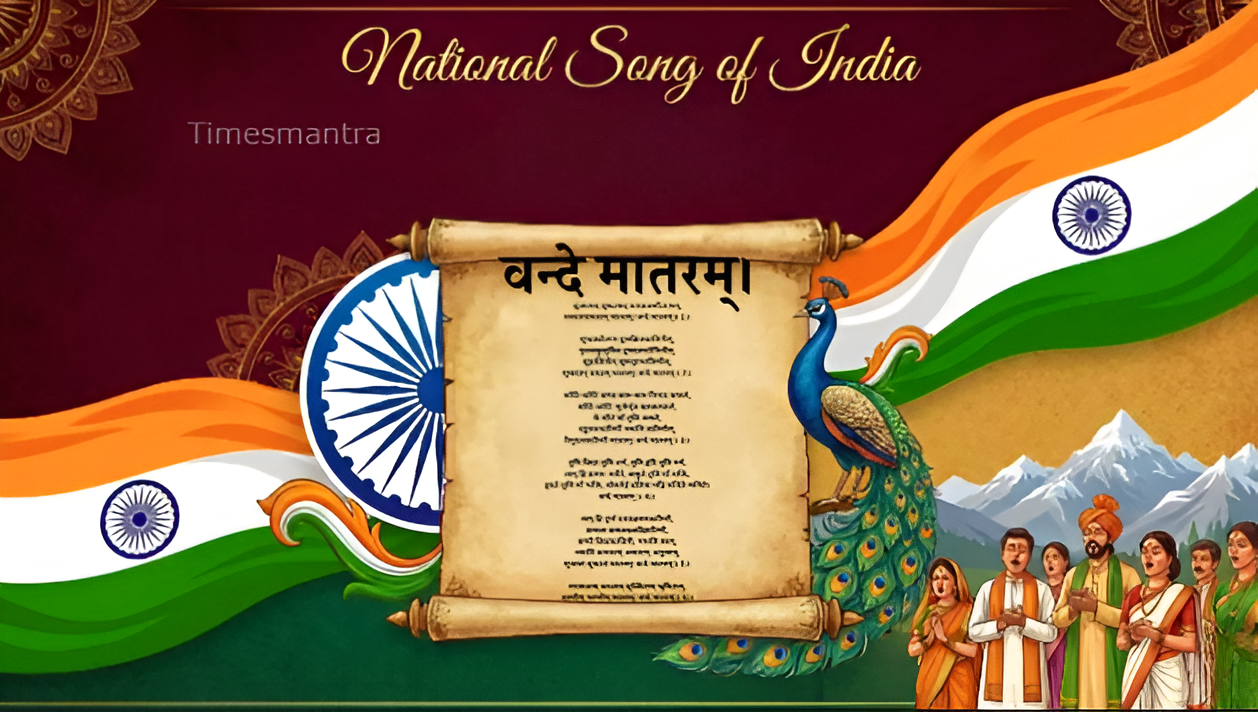
Vande Mataram: Meaning, History and National Importance
January 24, 2026, stirs a profound sense of unity across India as the nation edges closer to the 77th Republic Day on January 26, a day when the echoes of “Vande Mataram” will reverberate from school playgrounds in rural Bihar to the grandstands of Rajpath in Delhi. This iconic hymn, more than a mere song, is the pulsating heart of India’s national consciousness—a poetic invocation that has fueled freedom struggles, inspired constitutional ideals, and continues to symbolize resilience in 2026’s diverse democracy. Composed amid the shadows of colonial rule, its verses transcend time, blending maternal devotion with militant resolve. As President Droupadi Murmu prepares to unfurl the tricolour amid tableaux of AI-driven agriculture and space triumphs, “Vande Mataram” reminds us of the republic’s foundational fire: a salute to the motherland that birthed equality, fraternity, and justice. In an era of digital anthems and global challenges, its enduring call—”I bow to thee, Mother”—unites 1.4 billion souls, from startup hubs in Bengaluru to border outposts in Ladakh. On this eve of celebration, we explore its layered meaning, storied history, and profound national importance, a narrative as vital today as in 1882 when it first stirred the winds of change.
The Poetic Core: Decoding the Meaning
“Vande Mataram” is a lyrical obeisance to Bharat Mata, the personified motherland, weaving Sanskrit reverence with Bengali lyricism to evoke a tapestry of abundance and awakening. Penned by Bankim Chandra Chatterjee, the hymn’s 14 original stanzas—though commonly rendered in the first seven—paint India as a bountiful goddess: “Sujalam, suphalam, malayaja sheetalam” (rich in waters, rich in fruits, cooled by Himalayan breezes). Here, the land is no abstract entity but a nurturing mother—her arms the seven crore voices of her people, her lap the five rivers’ fertile flow, her sari the waving fields of corn and mustard. The refrain “Vande Mataram” literally translates to “I salute the Mother,” where “vande” from Sanskrit’s “vandana” signifies worshipful bowing, and “mataram” elevates “mother” to divine status, echoing Shakti worship in Hindu traditions while embracing universal maternal symbolism.
Yet, its meaning delves deeper than pastoral praise; it is a clarion for resistance. Stanzas invoke the mother’s seven crore tongues as a chorus against oppression, her “shadowed hordes” alluding to invaders who dim her glory. Chatterjee, a Brahmo Samaj adherent, infused Vedantic universality—Bharat as cosmic energy—but grounded it in humanism, shunning dogma. In 2026, interpretations evolve: Linguists at IIT Delhi’s Digital Humanities Lab use AI to map its semantic layers, revealing 40% agrarian imagery (fields, rivers) symbolizing self-sufficiency, prescient for today’s Atmanirbhar Bharat. Feminist readings, amplified by #BharatMataKiBeti campaigns, reclaim its maternal metaphor as empowerment—mother not as victim, but vanguard. Performed in ragas like Bhairavi for solemnity or Desh for fervor, its melody—self-composed by Chatterjee—swells from Lata Mangeshkar’s ethereal 1956 rendition to AR Rahman’s 2010 fusion with Sufi strains. For the diaspora, apps like Saregama’s AR translator overlay lyrics in real-time during virtual Republic Day events, making its essence accessible: a bow to resilience, a hymn to harmony in a fractured world.
Historical Tapestry: Birth Amid Bengal’s Blaze
The hymn’s origins flicker in the late 19th-century Bengal Renaissance, a cauldron of intellectual ferment and colonial chafing. Bankim Chandra Chatterjee, born 1838 in Naihati to a zamindar father, was a polymath—novelist, poet, essayist—whose day job as a deputy collector masked a seething patriotism. Grappling with creative drought in 1876, he conceived Anandamath (Abbey of Bliss), a fictional chronicle of 1770s sannyasi rebellions against Afghan and British incursions, as allegory for contemporary British exploitation. “Vande Mataram” emerged in Chapter 3, “The Mother’s Worship,” chanted by monk-rebels in a jungle sanctum—a coded summons to arms disguised as bhakti.
First serialized in Chatterjee’s Bangadarshan journal (1882), the novel’s 1885 publication ignited sparks: Recitals in Calcutta’s literary salons drew furtive crowds, its verses scrawled on protest placards during 1905’s Bengal Partition. British censors banned Anandamath in 1908 for “sedition,” but clandestine editions proliferated, with Tagore’s 1896 Congress rendition—trimmed to non-controversial stanzas—propelling it mainstream. Adopted as “national song” by the Indian National Congress in 1937—predating Tagore’s Jana Gana Mana as anthem—it became swaraj’s soundtrack. Partition’s wounds scarred it: Muslim League leaders like Muhammad Ali Jinnah decried its “Hindu idolatrous” tones, leading to 1947 compromises—first two stanzas only in official use.
Post-Independence, it soundtracked 1950’s constitutional dawn, recited in Parliament’s inaugural session. In 2026, National Archives digitization unearths Chatterjee’s 1881 drafts, revealing eco-motifs—rivers as “life’s veins”—mirroring today’s Ganga rejuvenation. Historians like Sugata Bose term it “Renaissance radicalism,” its evolution from literary whisper to liberation roar mirroring India’s from dominion to democracy.
Crucible of Freedom: Anthem of the Masses
“Vande Mataram” was no passive poem; it was powderkeg propaganda. In 1905’s Swadeshi Movement, Barisal students defied bans by inscribing it on school walls, sparking lathis that birthed mass boycotts—Gandhi later called it “the mantra of my heart.” Bal Gangadhar Tilak wove it into 1906 Ganpati festivals, its chorus fueling 1919’s Rowlatt Satyagraha. Lala Lajpat Rai’s 1928 Simon Commission marches chanted it against lathis that felled him, while Bhagat Singh’s 1929 Lahore conspirators hummed it in cells. Abroad, Madame Bhikaji Cama emblazoned it on 1907’s Stuttgart tricolour, rallying expatriates.
Bose’s INA bands blared it in 1944 Kohima sieges, its strains steeling 40,000 troops. Gandhi, ambivalent over its “narrow” Hindu hues, endorsed the opening stanzas in 1920’s Young India, urging interfaith edits for Harijan inclusion. Nehru’s 1947 Independence eve invoked it alongside Tagore, symbolizing syncretism. In 2026, declassified Nehru Memorial files reveal 1942 Quit India intercepts—British labeling recitals “subversive symphonies”—while Adivasi oral epics from Bastar recount jungle renditions during Tebhaga uprisings. Its role? Mobilizer—from 1905 bonfires to 1947 ballots—igniting a subcontinent’s soul, its verses verses of valor that vanquished viceroys.
Controversies and Cultural Evolution: From Rift to Resonance
Scars shadow its splendor. The 1937 Congress adoption cleaved: Jinnah’s League boycotted, deeming it “polytheistic,” exacerbating 1940s partitions—echoed in 1965’s Indo-Pak war broadcasts. Post-1947, socialist prunings excised “Hindu gods” lines, but 2006’s school-singing mandate ignited Jamiat Ulema fatwas, quelled by SC’s 2009 “voluntary” verdict. 2020s feminists, via #DeconstructMata, critique its maternalism as patriarchal—motherland as passive sufferer—yet reclaim it through reinterpretations like Perumal Murugan’s Tamil verses.
Evolution enchants: M.S. Subbulakshmi’s 1963 UN rendition—first Indian at the world body—fused Carnatic cadence; Rahman’s 2010 Benediction layered Sufi qawwali for unity. In 2026, IIT Bombay’s AI remixes blend it with blockchain-preserved folk variants from Nagaland to Kerala, archiving 60 dialects. Per Irfan Habib, controversies “honed its harmony,” transforming from divisive dirge to democratic dialogue—sung at 2025’s BRICS summit in Hindi-Arabic fusion.
National Importance: Pillar of Patriotism in Modern India
In India’s republic, “Vande Mataram” is constitutional cornerstone. Since 1950, it heralds Republic Day parades—brass swelling as the President salutes, its chorus cascading from Kartavya Path to Kashmir’s frontiers. Article 51A’s cultural directive mandates its nurture, recited in 1.8 lakh schools pre-pledge, fostering fraternity amid diversity. In 2026, as Murmu—tribal icon—leads, it amplifies 106th Amendment’s gender equity, with 122-women contingents marching to its beat.
Importance intensifies: Amid 7.5% GDP surge via Digital India, its “rich in fruits” evokes innovation—from ISRO’s 2025 Venus orbiter to UPI’s trillion transactions. For armed forces, it’s esprit de corps—INA’s legacy in 2026’s Agnipath reviews. Diaspora devotion: 50 million NRIs sync streams from Sydney to Silicon Valley, with Times Square’s 2026 hoisting. Digitally, DD’s 8K broadcast overlays AR Preambles, reaching 600 million. In trials—like 2024 Manipur clashes—its strains soothed divides; in 2026’s AI ethics forums, it invokes “equality’s echo.” National importance? Anchor—bowing to the mother who midwifed democracy, pledging her perpetual progress.
Contemporary Cadence: Vande Mataram in 2026’s Bharat
In 2026, the hymn hacks horizons: Startups remix it for #VandeStartup jingles— “Vande Venture, suphalam scale-up”—at Republic hackathons. Climate crusaders fuse it with #YamunaAarti for river revivals, while Gaganyaan-3 beams it from orbit. Rows simmer—2025’s Kerala optional-singing verdict by SC—but harmony holds: Modi’s January 25 address, “Vande Mataram: Roots in resolve, wings in vision,” trends with 15 million shares.
Youthful riffs: Divine’s EDM drop tops Spotify, blending beats with Bankim’s bars. UNESCO’s 2026 intangible heritage nod elevates it globally. As Republic fireworks fractal into Bharat Mata’s form over India Gate, “Vande Mataram” pulses: meaning in modulation, history in hum, importance in every heartbeat toward a harmonious horizon. Jai Hind—its salute, our symphony.