 By Krishna Dua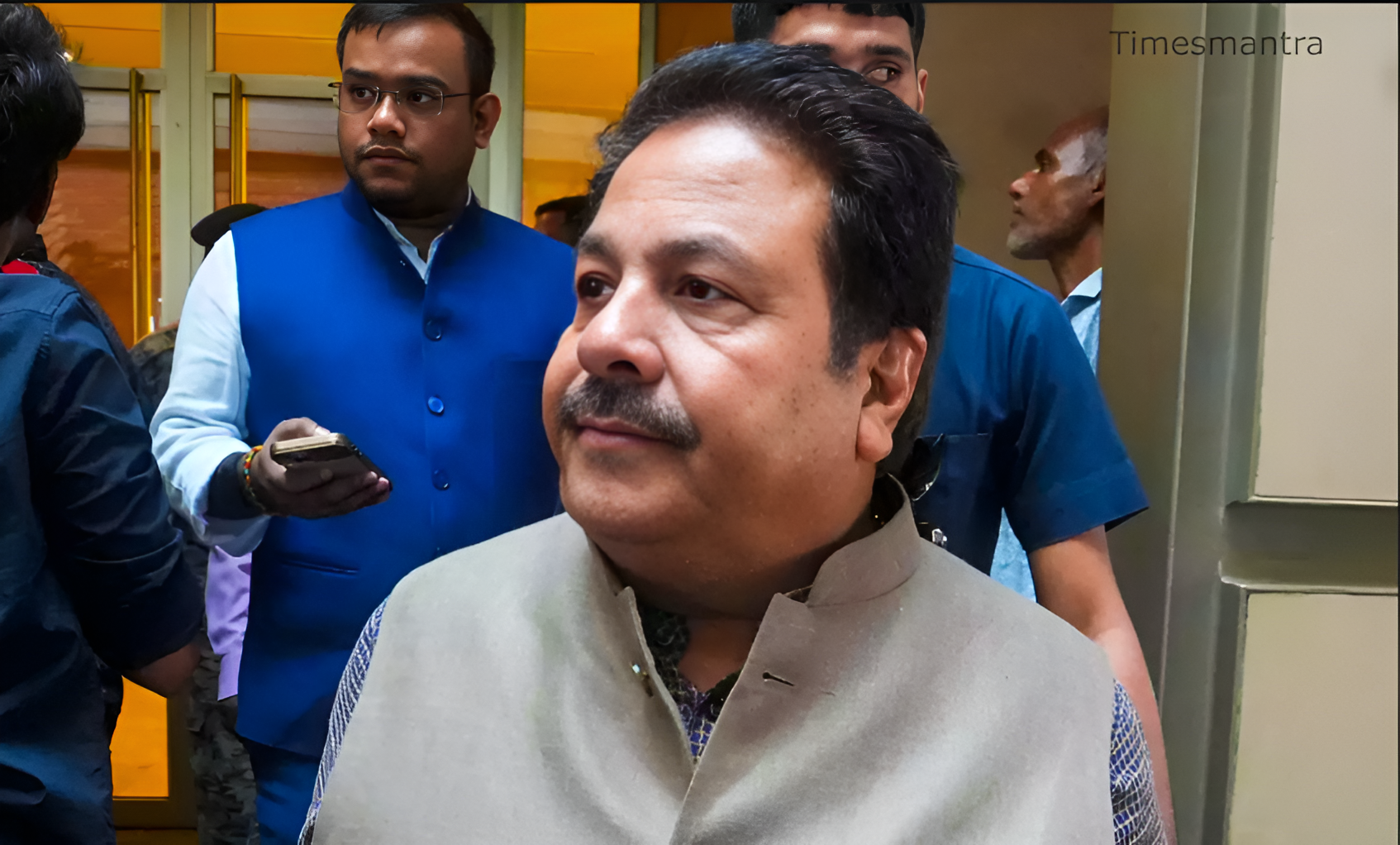
Rajeev Shukla Hits Back at Pakistan Media Claims
Rajeev Shukla, veteran Congress leader, former Union Minister of State for Parliamentary Affairs and current Chairman of the IPL Governing Council, delivered a sharp and point-by-point rebuttal on 12 February 2026 to a wave of allegations broadcast by several Pakistani television channels and amplified across social media. The controversy erupted after prominent Pakistani analysts and former players accused Shukla of personally orchestrating efforts to “isolate Pakistan cricket” and block bilateral series, Asia Cup hosting rights and fair ICC decision-making.
The remarks gained traction after a prime-time show on a leading Pakistani sports channel on 10 February, where a retired Test captain claimed: “Rajeev Shukla is the invisible hand behind every decision that hurts Pakistan cricket. As IPL chairman and influential Congress figure, he uses his clout in BCCI and ICC to keep us out.” Another commentator alleged that Shukla was “poisoning minds” in the Asian Cricket Council to force a hybrid Asia Cup 2026 model and delay Champions Trophy arrangements.
In a strongly worded statement released through the Congress media cell and posted on his verified X account late on 12 February, Rajeev Shukla categorically rejected the charges, defended the institutional autonomy of the BCCI and ICC, and accused sections of Pakistani media of “manufacturing controversy to deflect from internal failures.”
Shukla’s Full Response – Key Points
Rajeev Shukla’s statement, which was widely shared by Congress leaders and carried by major Indian news outlets, included the following key assertions:
“The allegations being levelled against me personally and against the BCCI are completely baseless, malicious and politically motivated. I have never made any personal comment against Pakistan cricket, its players or its administration. My only consistent position — which is also the official position of the BCCI and the Government of India — is that bilateral cricket between India and Pakistan can resume only when the Government of India is satisfied with the security and political environment.
All decisions regarding multi-nation events such as the Asia Cup and ICC tournaments are taken collectively by member boards through transparent voting processes. To suggest that any individual — let alone me — has the power to dictate terms to the entire Asian or global cricket community is absurd and shows a complete lack of understanding of how international cricket governance functions.
The Pakistan media and certain commentators should stop personal attacks and engage in constructive dialogue. Cricket should be a bridge, not a battleground. India has always supported Pakistan’s participation in ICC and ACC events on neutral venues when security concerns are addressed. That position has not changed.
I urge responsible voices in Pakistan to focus on improving their domestic structures, player welfare and team performance rather than inventing conspiracies.”
Background of the Allegations
The controversy was triggered by two parallel developments:
- Asia Cup 2026 Hosting Decision The Asian Cricket Council (ACC), in a meeting held in Dubai on 3 February 2026, voted 6–1 (Pakistan dissenting) to adopt a hybrid model for Asia Cup 2026: matches divided between Sri Lanka and the UAE. Pakistan had demanded full hosting rights, but the majority cited “ongoing security concerns” and “logistical issues” for the neutral-venue decision.
- Champions Trophy 2026 Schedule & Broadcast Delays The ICC had confirmed Pakistan as host for the Champions Trophy 2026, but Pakistani media alleged “Indian pressure” was behind repeated delays in finalising the schedule, broadcast rights and sponsorship deals.
Pakistani sports channels (ARY News, Geo Super, PTV Sports) ran multiple segments on 10–11 February accusing Rajeev Shukla of “poisoning relations” and using his dual role as Congress leader and IPL chairman to influence ICC decisions.
Political & Cricket Establishment Reactions in India
The Congress party immediately rallied behind Shukla:
- Congress spokesperson Randeep Surjewala: “This is a deliberate attempt by Pakistani media to deflect from their own cricket board’s failures and internal politics. Rajeev Shukla ji has served Indian cricket with integrity for decades.”
- Jairam Ramesh (Congress MP): “When Pakistan fails to honour its commitments, they blame India. It’s the same old playbook.”
- Pawan Khera (Congress spokesperson): “Personal attacks on Indian administrators will not change the ground reality of security concerns.”
From the cricket administration:
- BCCI Secretary Jay Shah: “The BCCI respects all member boards. Venue decisions are taken collectively. Personal attacks on administrators are unacceptable and counterproductive.”
- IPL Governing Council: Issued a short statement affirming that Shukla’s role in IPL has no bearing on international cricket governance.
Pakistan’s Domestic Context
The remarks from Pakistani media appear to have been amplified amid mounting internal pressure on the Pakistan Cricket Board (PCB). The PCB is facing criticism for:
- Poor team performance in recent ICC events
- Financial losses after the 2025 Champions Trophy was shifted to UAE
- Ongoing disputes with players over central contracts and revenue sharing
- Repeated scheduling and broadcast delays for the 2026 Champions Trophy
Blaming India — and high-profile Indian figures — remains a familiar tactic to deflect domestic criticism.
Broader India–Pakistan Cricket Relations
Bilateral cricket between India and Pakistan has remained suspended since the 2012–13 series (except for ICC and ACC multi-nation events on neutral venues). The last full bilateral series was in December 2012–January 2013. Since then:
- All India–Pakistan matches have been played only in ICC tournaments or Asia Cup
- The ACC has adopted a hybrid model for Asia Cup since 2023
- The PCB has repeatedly accused the BCCI of blocking bilateral series
The BCCI’s consistent position has been that bilateral cricket can resume only when the Government of India approves, citing security concerns.
Conclusion
Rajeev Shukla’s sharp and detailed rebuttal to Pakistani media allegations has effectively closed the immediate controversy, but it has once again highlighted the deep freeze in India–Pakistan bilateral cricket relations. The episode also shows how cricket continues to be used as a proxy battleground for larger political and emotional tensions between the two neighbours.
While Shukla has defended his record and the institutional autonomy of the BCCI and ICC, the larger question remains unanswered: when — and under what political conditions — will India and Pakistan resume full bilateral cricket? For now, fans on both sides must remain content with high-stakes encounters in ICC events and Asia Cup tournaments.
Until geopolitical realities change, the cricketing calendar will continue to offer only occasional glimpses of what could be one of the greatest rivalries in sport.