 By Krishna Dua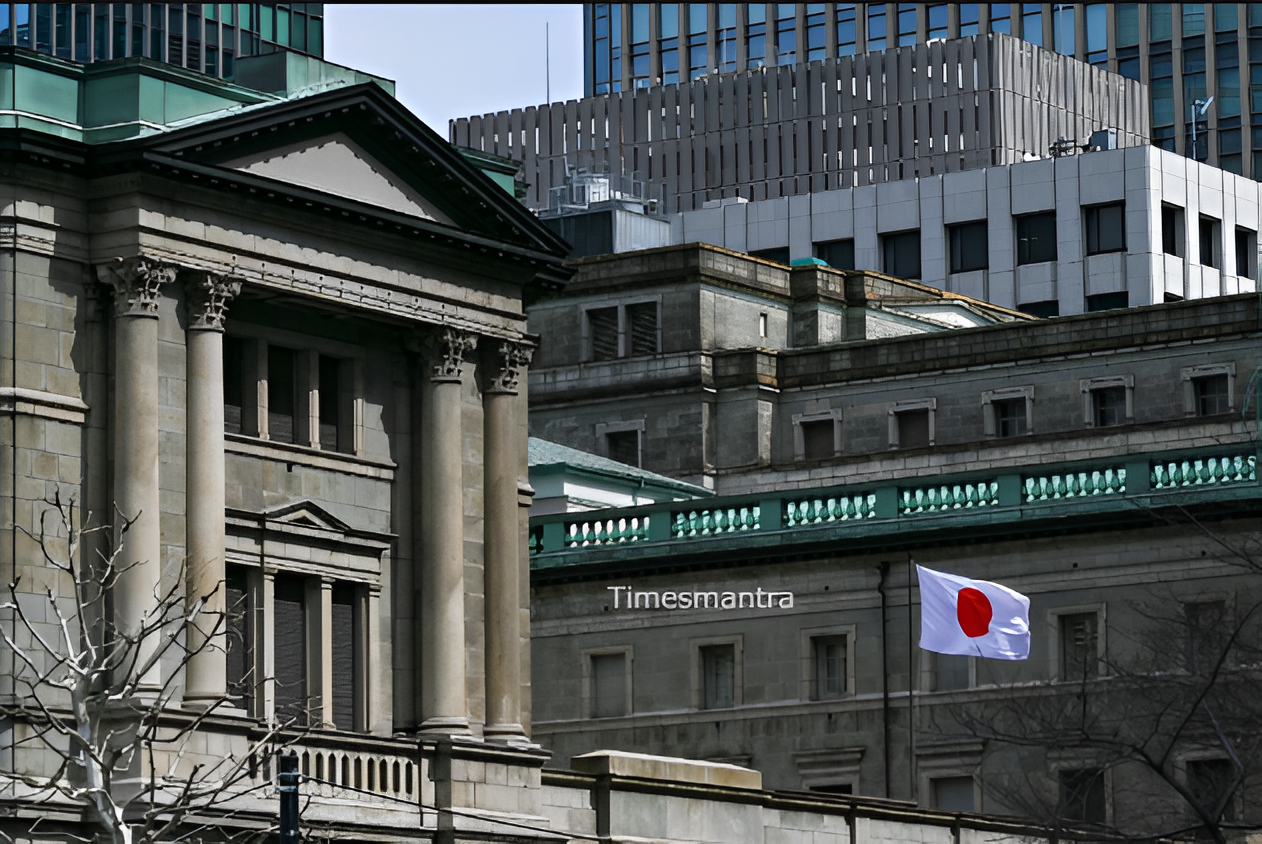
Bank of Japan Keeps Rates Unchanged, Maintains Cautious Outlook
Tokyo’s financial nerve center, the Bank of Japan (BoJ) headquarters in Nihonbashi, stood as a bastion of measured resolve on December 4, 2025, when the central bank opted to hold its short-term policy rate at 0.25 percent, extending its ultra-accommodative stance amid a fragile economic recovery. Governor Kazuo Ueda, in a meticulously scripted post-meeting press conference, emphasized the bank’s “data-dependent vigilance,” citing persistent inflationary undercurrents offset by subdued global demand and domestic wage stagnation at 2.0 percent year-on-year. The unanimous decision by the nine-member Policy Board, the 13th consecutive hold since the landmark July 2024 normalization, underscores the BoJ’s delicate dance in sustaining 2 percent inflation without igniting asset bubbles or yen volatility. “Our outlook remains cautious—while core CPI edges toward target, external risks and labor market fragilities warrant restraint,” Ueda stated, his tone a blend of academic precision and pragmatic pause. The yen, which had weakened 7.5 percent against the dollar in the fourth quarter, stabilized at ¥151.20 per USD post-announcement, while the Nikkei 225 inched up 0.4 percent to close at 39,920. This continuity, against a backdrop of the U.S. Federal Reserve’s recent 25-basis-point cut to 4.25-4.50 percent, reaffirms the BoJ’s outlier status among G7 peers, where most have hiked rates to combat post-pandemic inflation. As Japan’s economy grapples with a 1.0 percent Q3 GDP contraction—the first since 2022—the bank’s stance signals a prolonged path to policy parity, balancing deflation’s ghosts with growth’s ghosts.
Ueda’s address, delivered with the unflappable demeanor honed during his tenure as a Harvard economist, navigated the nuances of Japan’s dual mandate: price stability and maximum employment. “Inflation’s trajectory is encouraging, but not entrenched—core CPI at 2.2 percent in November reflects one-off factors like energy subsidies,” he explained, referencing Statistics Bureau data showing headline CPI at 2.5 percent, down from a September peak of 2.8 percent. The BoJ’s quantitative tightening, limited to ¥9 trillion in monthly Japanese Government Bond (JGB) purchases, proceeds apace, but Ueda quashed speculation of acceleration, prioritizing “smooth normalization” to avoid market mayhem.
Economic Equilibrium: Inflation’s Incremental Inch
Japan’s economic tableau, a mosaic of modest momentum and muted headwinds, frames the BoJ’s unhurried update. Core CPI, stripping volatile fresh food, lingered at 2.2 percent in November, per official tallies, inching toward the 2 percent goal after a 2.6 percent high in August. Wage pacts, the linchpin of the BoJ’s inflation virtuous circle, delivered a 2.0 percent uplift for 79 percent of shunto participants, edging up from 1.7 percent in 2024 but falling short of the 3.0 percent threshold for self-sustaining spirals. “Wages are warming slowly—household spending’s 0.7 percent Q3 dip signals caution,” Ueda dissected, citing Cabinet Office metrics where private consumption accounts for 55.8 percent of GDP, the G7’s laggard.
The yen’s 7.5 percent Q4 depreciation, from ¥140 to ¥151 per USD, has been a bittersweet blade: inflating export prices for Toyota’s $260 billion yearly haul by 6 percent but ballooning import bills for energy (45 percent of basket) by 14 percent. BoJ’s ¥65 trillion intervention arsenal stays sheathed, Ueda stressing “verbal vehemence” over forex fisticuffs. Corporate capex, climbing 4.5 percent in Q3, hints at investment ignition, but household hoarding at 6.0 percent—highest since 2021—curbs consumption, with retail sales ticking 0.2 percent MoM.
Ueda’s Utterance: Cautious Calibration in Context
Kazuo Ueda, BoJ helm since April 2023, helmed the announcement with haiku-like harmony, his Yale PhD pedigree infusing econometric elegance into equanimity. “Core inflation’s course conforms to forecasts, but risks skew downward from overseas,” Ueda unpacked, nodding to IMF’s 1.0 percent 2026 GDP projection for Japan, trimmed from 1.2 percent. Wage wisdom, from Rengo’s shunto ledger, showed 2.0 percent hikes for 81 percent of enterprises, but Ueda flagged “spring 2026 talks as pivotal—enduring 2 percent demands real wage rebound.”
Quantitative quarters: JGB acquisitions capped at ¥7.5 trillion monthly, with Ueda eyeing ¥5.5 trillion by mid-2026 if inflation anchors. Yield curve control, pinning 1 percent for 10-year JGBs, endures, but “nimble normalization” permits 0.15 percent flexibility. “We’re not hastening the harvest—stability trumps swiftness,” he summarized, alluding to 2023’s aborted hike that vaulted yen to ¥135 and vaporized Nikkei 6 percent.
Market Musings: Yen’s Yield and Investor Insights
Investors imbibed Ueda’s update with tempered triumph, the yen’s ¥151.20 perch perking carry trades but pricking import sentinels. Mizuho’s Takahide Kiuchi prognosticated ¥153 by March 2026, citing Fed’s 75 bps trims diluting Dollar dominion. “BoJ’s caution is currency calculus—yen softness sweetens exports, but at what wage wage?” Kiuchi quizzed.
Equity endgame: Nikkei’s 0.4 percent nudge to 39,920 masked sector schisms—exporters like Panasonic up 1.8 percent on yen yield, insurers like Sumitomo Life down 0.6 percent on low-rate lament. Bond bazaar: 10-year JGB yields edged to 0.88 percent, a 4 bps creep signaling taper tease.
Future Forecast: BoJ’s 2026 Trajectory
December 4’s hold heralds a hesitant horizon for 2026, analysts augur a 0.25-0.50 percent hike by June if wages crest 2.5 percent. IMF’s 1.0 percent GDP clip, consumption’s 0.6 percent Q4 drag, temper tempo. Headwinds howl: China’s 4.7 percent slowdown slashes $220 billion in Japanese exports, U.S. tariffs at 12 percent threaten electronics.
Optimists opine: Rengo’s 2026 shunto targets 3.2 percent hikes, core CPI at 2.5 percent by Q2. “BoJ’s steady ship sails toward normalization—cautious, but charting course,” Mizuho’s Kiuchi navigated.
In Tokyo’s tempestuous tides, BoJ’s December hold is a harbinger of harmony—a greenback steady, yen’s yield a cautious cadence.