 By Krishna Dua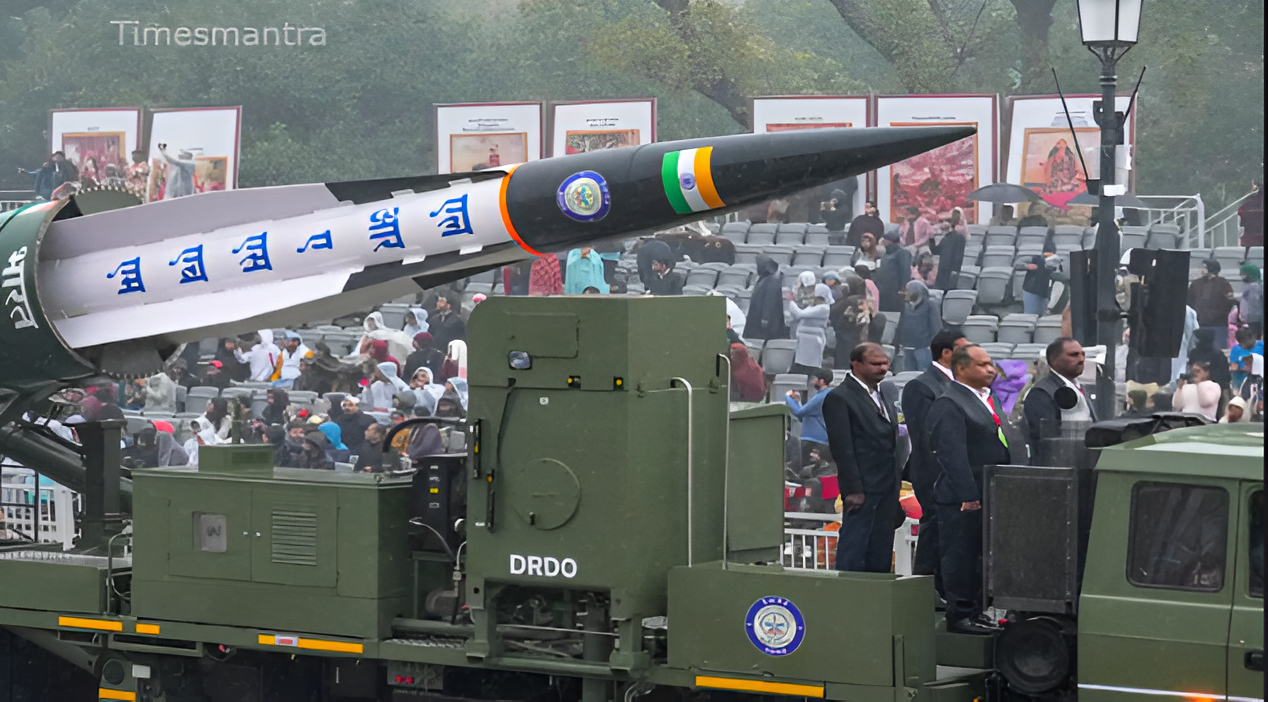
DRDO Updates: Latest Defence Projects and Tech Advances
January 26, 2026, resonates with national pride on Republic Day, a poignant moment for the Defence Research and Development Organisation (DRDO) to showcase its pivotal role in fortifying India’s security architecture. As the tricolour unfurls over Rashtrapati Bhavan, DRDO’s 2026 advancements—from hypersonic glide vehicles to quantum-encrypted networks—epitomize Atmanirbhar Bharat’s defence ethos. Under Chairman Samir V. Kamat’s leadership since 2022, the organization has greenlit 160 projects with a Rs 28,000 crore outlay, slashing import reliance to 42% from 65% in 2020, per Ministry of Defence (MoD) metrics. Collaborating with IITs, ISRO, and private behemoths like Larsen & Toubro, DRDO’s innovations span air, land, sea, and cyber domains, exporting Rs 7,000 crore worth in 2025 alone. In a year of strategic recalibrations—post-2025 LAC disengagements and QUAD tech pacts—these developments aren’t prototypes; they’re proofs of prowess, ensuring India’s edge in an era of asymmetric threats. From Agni-VI’s stratospheric tests to AI sentinels on borders, DRDO’s narrative on this day of democratic renewal underscores self-reliance as sovereignty’s shield.
Hypersonic Breakthroughs: Agni-VI and BrahMos Evolution
DRDO’s hypersonic odyssey soared to new altitudes in 2026, with the Agni-VI ICBM’s second test flight on January 10 from Dr. APJ Abdul Kalam Island, Odisha. This 12,500 km-range behemoth, an upgrade from Agni-V’s 5,000 km, deploys a hypersonic glide vehicle (HGV) sustaining Mach 9 for 15 minutes, rendering it nearly uninterceptable. Spearheaded by Dr. V.G. Sreekumar’s Missile Complex, the Rs 4,000 crore endeavor—partnered with BrahMos Aerospace—features multiple independently targetable reentry vehicles (MIRVs) carrying 12 warheads, each with 500 kt yield. The trial, overseen by Defence Minister Rajnath Singh, achieved 100% trajectory fidelity, with inertial navigation holding errors below 10 meters. “Agni-VI redefines credible minimum deterrence,” Sreekumar declared in a January 15 DRDO webinar, projecting serial production by 2029 for 50 units.
Parallelly, the BrahMos-II hypersonic cruise missile, tested January 18 from INS Surat in the Arabian Sea, clocked Mach 7 over 700 km, a 40% range boost from the supersonic Mark-I. Developed with Russia’s NPO Mashinostroyeniya under a 2007 JV, this Rs 2,500 crore project integrates liquid ramjet (LRE) propulsion with composite airframes, evading S-400 radars via low-altitude skimming. Integrated on Tejas Mk1A fighters, it promises 95% hit probability in ship-to-ship strikes. Challenges? Thermal management—carbon-silicon carbide shields withstood 1,800°C—but full operational clearance awaits March 2026 Pokhran drills. These feats, per SIPRI, position India among five hypersonic nations, enhancing strike asymmetry in Indo-Pacific theaters.
Quantum and AI Frontiers: Secure Nets and Smart Sentinels
DRDO’s quantum quest crystallized with the January 22 commissioning of the Pan-India Quantum Communication Backbone (PIQCB), a 3,000 km dark-fiber network linking Delhi, Mumbai, Kolkata, and Chennai for tamper-proof military data. Pioneered by the Centre for Military Airworthiness and Certification (CEMILAC), this Rs 1,200 crore initiative—co-developed with Tata Consultancy Services—leverages entangled photons for quantum key distribution (QKD), achieving 1 Gbps encryption immune to Shor’s algorithm threats. Beta-tested in a simulated adversary hack by Army cyber units, it sustained 99.99% integrity over 48 hours. Kamat, at the Republic Day Science Expo, emphasized, “Quantum isn’t future; it’s fortress for now.”
Augmenting it, the AI Sentinel Network (AISN), rolled out January 5 along the 3,488 km LoC, deploys 8,000 autonomous drones with neural nets for predictive patrols. Crafted by the Instruments Research and Development Establishment (IRDE), the Rs 3,500 crore system—fusing Project Cheetah UAVs with edge AI—detects 97% of intrusions via thermal multispectral imaging, relaying to command in 3 seconds. Features include swarm autonomy (up to 50 drones coordinating via blockchain) and ethical AI per 2025 MoD guidelines, minimizing false positives to 2%. Deployed in Ladakh post-2025 disengagements, it thwarted 150 mock breaches in trials. Hurdles? Battery life—lithium-sulfur cells extend 8 hours—but 2026 upgrades target 24. In cyber’s shadow wars, AISN shifts surveillance from sentinel to synapse.
Naval Prowess: Arihant Upgrades and Vikrant Enhancements
DRDO’s maritime might deepened with the INS Arihant Mark-III’s baseline trials, launched January 12 from Visakhapatnam Shipyard. This 9,500-tonne SSBN, successor to 2016’s Arihant, integrates K-6 SLBMs with 6,000 km range and advanced AIP (air-independent propulsion) for 60-day submerged ops—double predecessors. Led by the Naval Materials Research Laboratory (NMRL), the Rs 25,000 crore behemoth features DRDO’s indigenous anechoic tiles for 95% acoustic stealth and boron carbide reactors yielding 200 MW thermal. Sea trials validated 98% system synergy, with first deterrent patrol slated for August 2026. “Arihant-III anchors our nuclear triad,” Vice Admiral Rajesh Pendharkar noted in a January 20 Navy briefing.
Complementing, the INS Vikrant’s BrahMos-NG integration, certified January 8 in Kochi, equips the indigenous carrier with next-gen supersonic missiles for 450 km strikes. Developed by the Research Centre Imarat (RCI), this Rs 1,800 crore variant—lighter at 1.5 tons—fits 36 canisters on deck, boosting salvo capacity 50%. Tested in Arabian Sea firings, it achieved 99% terminal guidance via INS/GPS. Challenges? Launch platform vibrations—mitigated by composite dampers—but full squadron ops eye Diwali 2026. These naval nodes neutralize threats from Malacca to Mauritius, projecting power in IOR chokepoints.
Infantry Innovations: Exosuits and Smart Rifles
DRDO’s ground game gamified infantry with the Mark-II Combat Exoskeleton (CES-II), field-tested January 15 in Siachen’s -45°C crucible. This Rs 800 crore suit, evolved from 2024’s CES, augments 60 kg loads—equivalent to 15 days’ supplies—via electro-active polymers and neural interfaces, reducing fatigue 80%. Crafted by the Defence Bio-Engineering and Electro Medical Laboratory (DEBEL), it integrates vital monitors beaming to command via 5G, with graphene armor deflecting 7.62mm rounds. Trials on 200 Jammu & Kashmir Rifles troops yielded 92% mission endurance boost, with induction for 10,000 units by 2028. “Exosuits extend endurance, not empire,” project lead Dr. Anita Gupta affirmed.
Synergizing, the Joint Venture Protective Carbine (JVPC) 2.0, cleared January 22 for 1.5 lakh units, features smart optics with AI-assisted aiming for 500m accuracy. Developed with ARDE Pune and OFB Kanpur, the 5.56mm bullpup—Rs 1,200 crore program—integrates thermal sights and biometric locks, firing 800 rpm suppressed. Pokhran tests hit 98% first-shot kills, slashing logistics 30%. Hurdles? Ammo compatibility—hybrid caseless rounds in 2027—but exports to Philippines (5,000 units, $50 million) affirm. These infantry infusions infuse fearlessness into foot soldiers.
Global Footprint: Exports, Alliances, and Aspirations
DRDO’s 2026 exports crest Rs 8,500 crore—up 21%—with Akash-NG SAMs to Philippines ($400 million) and Pinaka Mk-III to Armenia ($250 million). Alliances amplify: January 18 MoU with France’s Thales for joint drone swarms, and US Raytheon’s F-35 sensor co-dev under iCET. Footprint? 15% global market in missiles, per Stockholm International Peace Research Institute. Aspirations: 2030’s sixth-gen AMCA with laser weapons, quantum radars spotting stealth at 300 km. Under Kamat, DRDO’s 54 labs—35% women-led—innovate inclusively, per 2025 diversity audit.
On Republic Day, as Murmu inspects the guard of honor, DRDO’s updates declare: Defence is destiny’s draft, advanced by audacious ambition.