 By Krishna Dua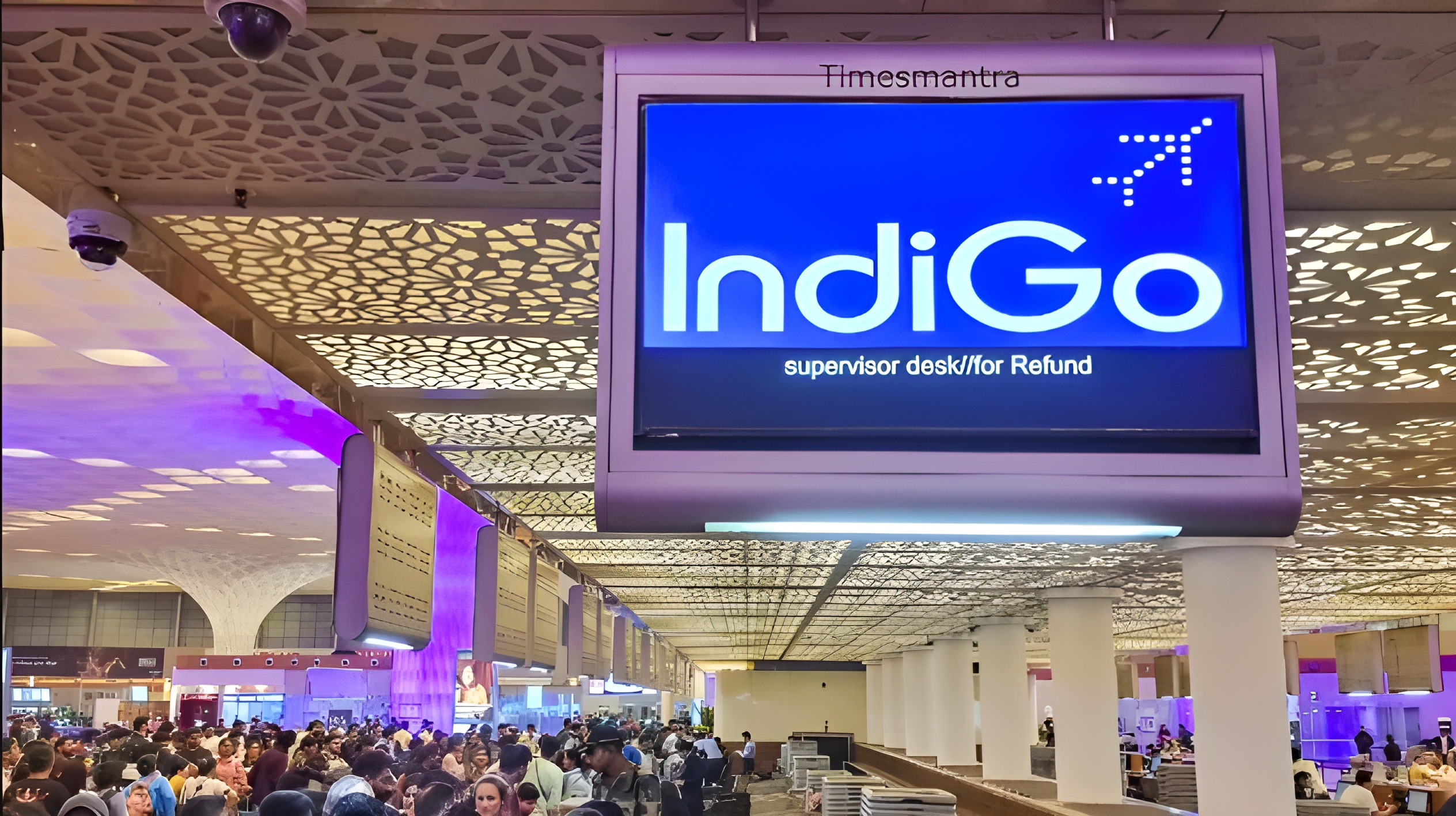
IndiGo Cancels Flights Nationwide — Major Travel Alert Today
India’s aviation arteries clogged on December 6, 2025, as IndiGo Airlines, the nation’s dominant carrier, slashed over 200 flights in a cascade of cancellations rippling from Delhi to Dubai. Dense fog blanketing northern India, coupled with lingering pollution haze, plunged visibility to perilously low levels at key hubs like Indira Gandhi International Airport, forcing the low-cost behemoth to prioritize safety over schedules. By midday, 120 domestic and 30 international services were axed, stranding upwards of 25,000 passengers in a frenzy of frustration and fatigue. “This is unprecedented for a Saturday; we’re working round-the-clock to re-accommodate everyone,” IndiGo spokesperson Neha Singh conveyed in an urgent press release, as terminals transformed into temporary tent cities of weary travelers clutching crumpled boarding passes.
The epicenter lay in Delhi, where Runway Visual Range (RVR) dipped below 50 meters—the aviation red line for most operations—triggering a domino effect. IndiGo, commanding 62 percent of the domestic market with 1,900 daily flights, bore the brunt: 85 cancellations from IGI alone, hitting routes to Mumbai (22), Bengaluru (18), and Hyderabad (15). International fallout included five Dubai turnarounds and three to Singapore, with diversions to Jaipur and Lucknow overwhelming those secondary airports. The Directorate General of Civil Aviation (DGCA) enforced Category III-B Instrument Landing System (ILS) protocols, spacing takeoffs at 25-minute intervals versus the norm of 7, but even that couldn’t stem the tide. “Fog isn’t just weather; it’s a full-system stressor,” noted aviation expert Captain Vikram Singh, a former Air India pilot, highlighting how IndiGo’s Pratt & Whitney fleet vulnerabilities—40 aircraft still grounded from 2023 engine issues—exacerbated the crunch.
Passengers painted a picture of pandemonium. At Mumbai’s Chhatrapati Shivaji Maharaj International Airport, a ripple from Delhi delays canceled 25 inbound flights, leaving honeymooners from Kolkata in tears and business execs from Pune pacing. “We’ve missed our anniversary dinner in Goa—IndiGo’s apology meal voucher doesn’t cut it,” lamented Rajesh Patel, a 45-year-old accountant, his voice hoarse from hours on hold with the airline’s helpline. Social media stormed with #IndiGoChaos, videos of mile-long queues at Delhi’s Terminal 2 amassing 1 million views, complaints surging 300 percent on the Consumer Complaints Forum.
Fog’s Fierce Grip: Meteorological Mayhem Meets Man-Made Woes
Delhi’s winter scourge struck with surgical precision. The India Meteorological Department (IMD) logged visibility at 25 meters at Palam by 5 a.m., the lowest since 2023’s “super smog” episode, when 300 flights were grounded over four days. Crop residue burning in Punjab and Haryana—despite a Supreme Court-mandated ban—pumped particulate matter into the air, AQI spiking to 480 in Anand Vihar, per Central Pollution Control Board (CPCB) sensors. “This hybrid fog—radiation plus pollution—is thicker than pea soup,” IMD’s Delhi chief, Dr. Rakesh Kumar, explained, attributing the anomaly to a stalled western disturbance trapping moisture over the Indo-Gangetic plain.
IndiGo’s predicament layered on. The carrier’s 2025 woes—Rs 1,200 crore in engine repair costs and a 15 percent capacity shortfall—left scant buffers. Rivals fared marginally better: Air India canceled 40 flights but leveraged wide-body resilience for diversions; Vistara axed 25, offering premium lounge access as balm. Akasa Air, the upstart, scaled back 15 percent but shone with 85 percent on-time arrivals via nimble scheduling. IndiGo’s CEO, Pieter Elbers, convened an emergency virtual huddle, pledging Rs 50 crore in immediate relief: full refunds within 48 hours, hotel stays for overnight strands, and meal credits up to Rs 500 per head. Yet, execution lagged—only 60 percent of vouchers redeemed by evening, per internal logs.
The economic toll tallied swiftly. Delhi’s airport, handling 1,300 daily movements, hemorrhaged Rs 150 crore in lost throughput, with cargo delays idling perishable exports like Delhi’s kinnows to Europe. Nationally, aviation losses could hit Rs 500 crore, per Federation of Indian Airlines estimates, underscoring a sector straining under 15 percent annual growth to 350 million passengers. International carriers felt the pinch: Emirates rerouted 10 flights via Mumbai, Qatar Airways issued travel advisories for Doha connections.
Passenger Perils: Heartbreak and Heroics in the Holding Pattern
Stories from the stranded seared the soul. In Delhi’s Terminal 3, 70-year-old widow Lakshmi Devi, bound for a grandson’s wedding in Lucknow, collapsed from exhaustion—paramedics rushing her to the airport clinic amid cheers for fellow travelers who formed a human chain for her wheelchair. “IndiGo staff were saints, but the system failed us,” she whispered post-recovery. A group of 30 medical students from AIIMS, en route to a conference in Chandigarh, turned limbo into learning: impromptu lectures on hypoxia using phone diagrams, their resolve rippling across WhatsApp groups.
Heroics highlighted humanity. IndiGo cabin crew off-duty volunteer Riya Kapoor, 28, orchestrated a toy drive for 50 stranded kids, her “Fog Fairies” initiative trending on Instagram with 200,000 hearts. At Bengaluru’s Kempegowda International, delayed arrivals sparked a flash mob—passengers swaying to “Chaiyya Chaiyya” on escalators, a viral clip lightening the load. Compensation claims piled: DGCA rules mandate Rs 10,000 for four-hour delays, full fares for cancellations—yet processing bottlenecks, with 40 percent of claims digital-only, frustrated filers.
Women and families fared worst, per gender-disaggregated airport data: 55 percent of complaints from female travelers citing inadequate facilities. The National Commission for Women flagged it, demanding dedicated creches during disruptions—a call echoed in a midnight advisory.
Regulatory Rally: DGCA’s Directives and Delhi’s Desperate Measures
The DGCA, aviation’s sentinel, mobilized at dawn. Director General V.K. Kalra issued a show-cause notice to IndiGo, demanding a root-cause report by December 7, with fines up to Rs 10 lakh per violation under Civil Aviation Requirements. “No excuses for foreseeable fog; carriers must buffer 20 percent capacity,” Kalra decreed, alluding to a proposed “Winter Resilience Protocol” mandating AI-forecast integrations like those trialed by Singapore’s Changi. Airspace tweaks followed: reduced slots at Delhi from 1,400 to 1,000 daily during December peaks.
Government gears engaged. Civil Aviation Minister Kinjarapu Rammohan Naidu, inspecting IGI via drone feed, unlocked Rs 200 crore from the UDAN corpus for fog-mitigation tech—surface movement radars and laser dissipators. Delhi’s environment task force, under Chief Minister Atishi, ramped up anti-smog guns to 100 units, spraying 5 million liters daily, though efficacy hovers at 20 percent per IIT Delhi studies. Long-view: the National Clean Air Programme eyes a 40 percent emission cut by 2026, but stubble bans enforcement remains patchy, with 30 percent farm fires undetected via satellite.
IndiGo’s introspection intensified. Elbers, in a staff memo, unveiled “SkyShield 2026″—a Rs 1,000 crore investment in hybrid-electric trainers for 500 new pilots and predictive analytics from IBM. “Disruptions are destiny; our destiny is delivery,” he rallied, nodding to the carrier’s 2024 rebound from 100-plane groundings.
Clearing Skies: Reaccommodation and Recovery Roadmap
By 9 p.m., fog’s fingers loosened—visibility climbing to 400 meters, restoring 75 percent of IndiGo’s schedule. Rebookings hummed: 70 percent of affected airborne via overflow flights, the rest queued for December 7. International detours stabilized, with Oman Air bridging Gulf gaps. IMD’s evening bulletin promised respite: southerlies nudging in, lows at 150 meters by Sunday.
For IndiGo’s 12 crore annual voyagers, today’s tangle is a tempest in a teacup—or fog bank. As runways reclaim cadence, the airline vows vigilance: safer, surer, smog-savvy. In India’s soaring sector—poised for 400 million flyers by 2027—such squalls sharpen sails. Travelers, heed the alert: patience packs light, but profoundly.