 By Krishna Dua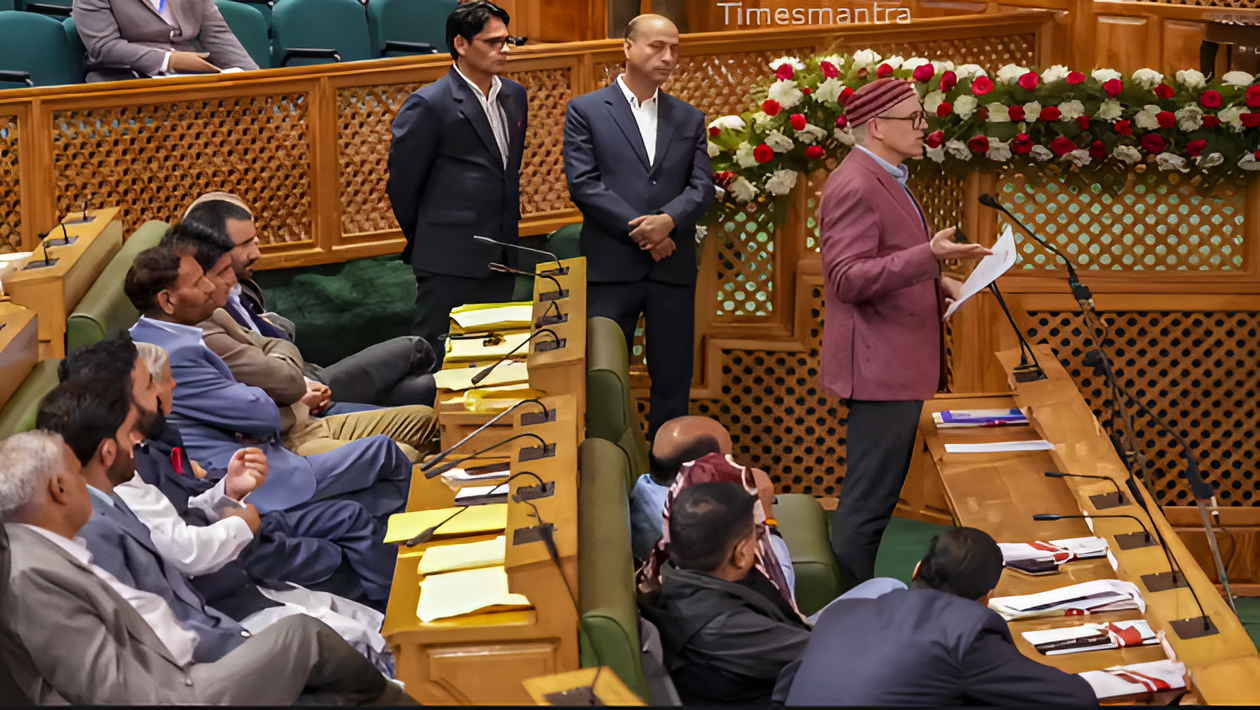
Jammu and Kashmir Assembly News: Latest Political Updates
The Jammu and Kashmir Legislative Assembly, restored after a gap of more than six years, has completed nearly four months of functioning since its constitution in October 2025. The first Assembly elected post the abrogation of Article 370 continues to be a focal point of political contestation, legislative activity and public scrutiny. Chief Minister Omar Abdullah heads a National Conference–Congress coalition government with an effective strength of 56 in the 90-member House, while the Bharatiya Janata Party remains the principal opposition with 29 seats. As the House prepares for its budget session beginning 20 February 2026, here is a comprehensive update on the latest political developments, key legislative actions, floor dynamics, policy announcements and emerging fault lines as of 3 February 2026.
Coalition Stability and Floor Management
The Omar Abdullah-led government enjoys a comfortable majority on paper (NC 42 + Congress 6 + Independents 1 + PDP defector 1 = 50 + outside support from 9 Independents = 59). However, the coalition has faced internal strains:
- In mid-January 2026, senior NC leader Ali Mohammad Sagar publicly criticised the government’s handling of the Pahari reservation issue, warning that the community’s alienation could cost the party dearly in Rajouri and Poonch in future elections.
- Congress MLAs have expressed private dissatisfaction over the slow pace of implementation of the Common Minimum Programme agreed upon in October 2025, particularly on police reforms and transfer of land to evacuees.
- Three Independents who extended outside support in December 2025 have demanded cabinet berths; negotiations are ongoing.
Despite these frictions, the government has maintained discipline on the floor. Speaker Abdul Rahim Rather (NC) has earned praise for balanced conduct, though the BJP frequently accuses him of partisan rulings on adjournment motions.
Key Legislative Actions (November 2025 – January 2026)
The Assembly has passed 16 bills in four sessions so far. Major enactments include:
- Jammu and Kashmir Reservation (Amendment) Act, 2025 Increased ST reservation from 10% to 20%; introduced 4% horizontal reservation for Pahari-speaking and Paddari-speaking people within the 10% EWS quota. The bill passed amid protests from Gujjar and Bakerwal groups outside the Assembly.
- Jammu and Kashmir Reorganisation (Amendment) Act, 2025 Restored limited ceremonial use of the erstwhile state flag and state anthem while retaining Union Territory status. The BJP staged a walkout during the passage.
- Jammu and Kashmir Fiscal Responsibility and Budget Management (Amendment) Act, 2025 Raised borrowing limit to 4% of GSDP for FY 2026–27 to fund infrastructure projects.
- Jammu and Kashmir Protection of Women from Domestic Violence (Amendment) Act, 2025 Strengthened protection officers’ powers and mandated fast-track courts in every district.
- Jammu and Kashmir Right to Information (Amendment) Act, 2025 Brought several public authorities (including some under Lieutenant Governor’s direct control) under the RTI framework.
The opposition has criticised the government for “rushing bills without adequate debate” and “avoiding discussion on core issues like domicile law and Roshni Act repeal”.
Major Policy Announcements & Executive Decisions
Since assuming office, the government has rolled out several high-visibility schemes:
- 25,000 fresh recruitment drive — Notification issued 15 January 2026 for police, education, health, revenue and other departments.
- Free electricity up to 200 units — Implemented for domestic consumers from 1 February 2026.
- Winter tourism package — ₹1,300 crore announced for Gulmarg, Pahalgam, Sonamarg and other destinations.
- Flood mitigation plan — ₹3,800 crore package for Jhelum riverbank strengthening and smart drainage in Srinagar and other vulnerable towns.
- SRO 2025 review — Committee constituted to revisit land-allocation rules under the Roshni Act within six months.
Security & Law and Order Developments
The Valley has remained largely peaceful since the election, but January 2026 saw two notable incidents:
- 12 January — Encounter in Shopian; two Lashkar-e-Taiba militants killed.
- 25 January — Grenade attack on CRPF convoy near Awantipora; three jawans injured.
Police have arrested 160 persons under UAPA/POTA since October 2025, mostly on charges of harbouring militants or raising pro-independence slogans during the election campaign. The government has claimed a 35% reduction in militancy-related incidents compared with the same period last year.
Political Realignments and Opposition Strategy
The most significant floor development has been the gradual consolidation of support:
- Engineer Rashid (Independent, Baramulla) formally joined the coalition in December 2025 and was inducted as Minister for Tourism and Culture.
- Three Independents from north Kashmir extended outside support in January 2026, taking the coalition’s effective strength to 59.
- The PDP, reduced to 3 seats, has adopted a “constructive opposition” stance but voted against the government on the reservation bill.
The BJP has intensified its campaign accusing the NC–Congress government of “appeasement politics” and “soft separatism”. Union Home Minister Amit Shah, during a visit to Jammu on 28 January, warned that “any attempt to dilute the constitutional integration of J&K will be strongly resisted”.
Public Mood and Media Narrative
Public sentiment remains mixed. Urban middle-class voters in Srinagar and Jammu appreciate faster road repairs, improved power supply and visible governance. Rural and border areas continue to complain about unemployment, inflation and inadequate compensation for land acquired for infrastructure projects.
Media narrative is sharply divided:
- Local English dailies (Greater Kashmir, Rising Kashmir) focus on governance delivery and coalition stability.
- Urdu press (Aafaq, Alsafa) highlights reservation controversies and security issues.
- National channels (Republic Bharat, Times Now) emphasise “separatist shadow” over the government.
Outlook for the Budget Session (20 February 2026 onwards)
The upcoming budget session will be the first full budget presented by the elected government. Key items expected on the agenda:
- Presentation of full budget for FY 2026–27
- Debate on Roshni Act repeal/replacement bill
- Discussion on proposed Sixth Schedule status for Ladakh
- Bills on domicile-law modifications and further reservation rationalisation
- Motion of thanks on the Lieutenant Governor’s address
The session is also likely to see heated discussion on Centre–state relations, police reforms and the demand for restoration of full statehood.
Conclusion
Four months after its constitution, the Jammu and Kashmir Legislative Assembly remains a work in progress—a restored democratic institution navigating the complex realities of a region with a fraught political history. The Omar Abdullah government has managed to maintain stability on the floor and deliver visible governance improvements in key sectors, but it faces mounting pressure on reservation policy, security management and Centre–state ties.
Whether the coalition can sustain its majority, deliver on its promises and manage internal contradictions while handling opposition offensives will shape the political trajectory of Jammu and Kashmir in the coming year. As the budget session approaches, all eyes are on how the House balances regional aspirations with constitutional realities.