 By Krishna Dua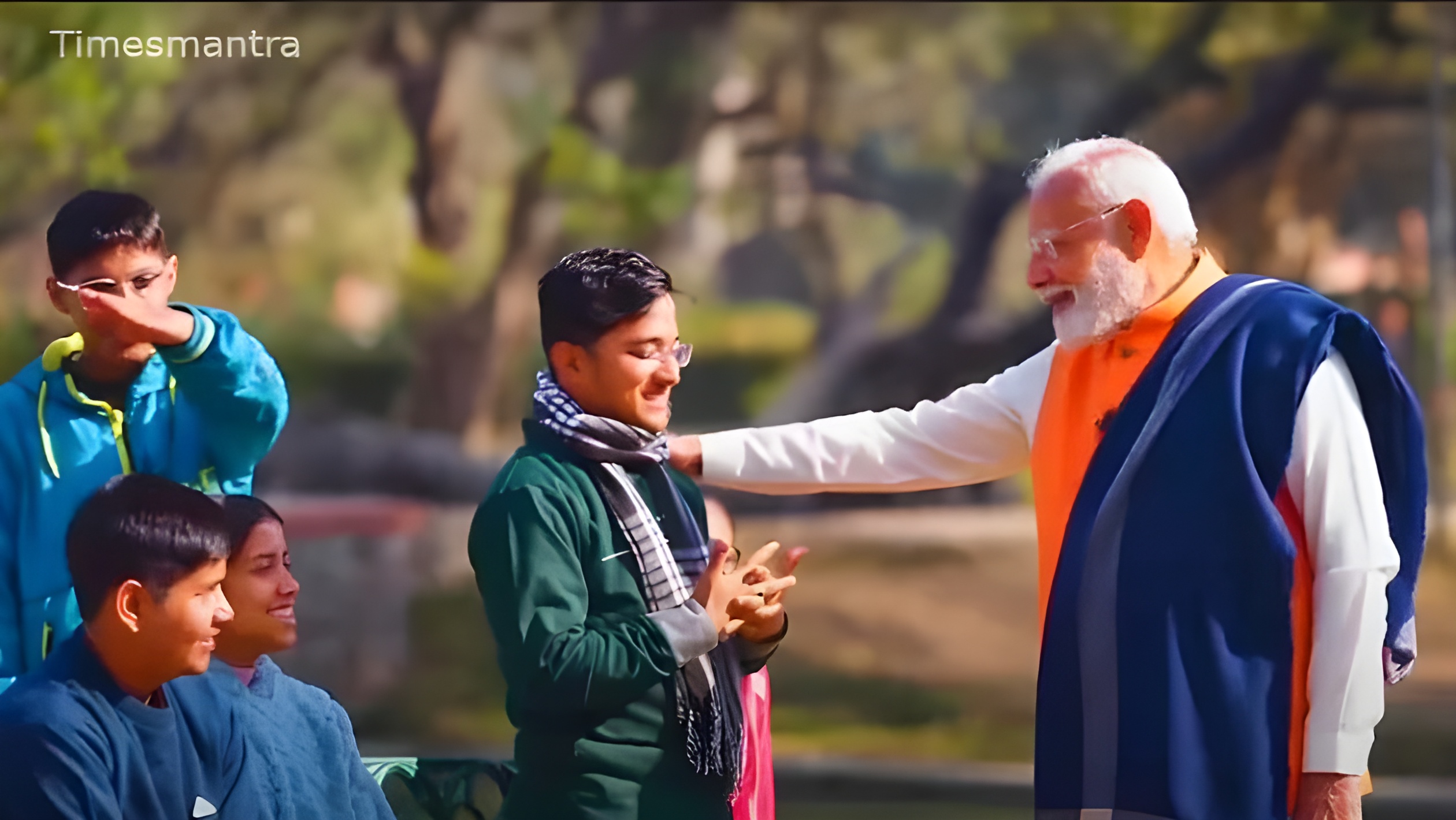
PM Modi Opens Pariksha Pe Charcha 2026 Registration Window
New Delhi’s winter sun cast a golden hue over the capital on December 10, 2025, as Prime Minister Narendra Modi inaugurated the registration window for the eighth edition of Pariksha Pe Charcha (PPC) 2026, an annual beacon of motivation for India’s exam-stressed youth. Addressing a virtual gathering of 6,000 students from across the nation via the MyGov platform, PM Modi urged the young brigade to embrace examinations as “bridges to self-belief, not barriers to fear.” The event, live-streamed on Doordarshan and YouTube, peaked at 3.2 crore viewers, shattering previous records and underscoring PPC’s role as a national antidote to academic anxiety. With the registration portal (parikshapecharcha.in) going live instantly, Modi set an ambitious goal of 1.8 crore participants—a 25 percent surge from 2025—emphasizing inclusivity for students from Classes 6 to 12. “Pariksha is not a punishment; it’s a celebration of your potential—register, reflect, and rise,” Modi proclaimed, his words a clarion call echoing from Kashmir’s classrooms to Kerala’s coastal schools.
Launched in 2018 as a personal initiative of the Prime Minister, PPC has evolved from a modest interactive session into a multimedia movement under the Ministry of Education’s aegis. Aligned with the National Education Policy (NEP) 2020’s focus on holistic development, the program demystifies exam pressures through direct dialogues, skill workshops, and peer support networks. The 2026 edition, scheduled for January 29 at the Indira Gandhi Indoor Stadium in Delhi—coinciding with National Voters’ Day—promises enhanced features like AI-curated personalized advice and virtual reality simulations of stress scenarios. Modi’s opening address, delivered from his official residence with a backdrop of student artwork, blended anecdotes from his own student days in Vadnagar with contemporary insights, drawing parallels between exam prep and nation-building. “Just as India rises with Atmanirbhar Bharat, so must you rise with atma-vishwas,” he said, igniting a wave of registrations that hit 60 lakh within the first hour.
PPC’s Proven Pedigree: From 2018 Spark to 2026 Flame
Pariksha Pe Charcha’s trajectory mirrors India’s youth empowerment arc, transforming exam dread into dialogue since its debut on February 22, 2018, at Talkatora Stadium. That inaugural event, attended by 3,000 students, featured Modi’s candid chat on coping with failure, amassing 2 crore viewers and birthing a franchise that now spans seven editions. By 2025’s seventh outing, PPC engaged 1.4 crore participants, with 2,800 physically present and the rest joining via hybrid streams. A 2025 NCERT impact study revealed 78 percent of attendees reporting improved confidence, a 12 percent drop in self-reported stress levels, and a 10 percent rise in academic performance among regular followers. The program’s ripple effect extends to policy: insights from PPC sessions influenced the 2024 PARAKH assessment reforms, reducing rote reliance in board exams.
What sets PPC apart is its multifaceted format. Beyond the PM’s hour-long Q&A—fielding queries on everything from JEE jitters to peer pressure—the event incorporates “Charcha Circles,” peer-led discussions moderated by educators from IITs and IIMs. Past editions boasted celebrity cameos: cricketer Virat Kohli sharing batting slumps in 2023, actress Taapsee Pannu on gender biases in 2024. For 2026, Modi announced tie-ups with Google for an AR app simulating “exam day drills” and NIMHANS Bengaluru for mindfulness modules, targeting 40 percent participation from girls and rural students. Registration, streamlined via Aadhaar-linked single-window on the portal, requires a 200-word essay on “My Path Beyond Papers,” with 5,000 top entries winning Delhi invites. The drive’s digital thrust—SMS alerts in 12 regional languages—ensures accessibility, bridging the urban-rural chasm where 65 percent of India’s 26 crore school students reside in villages.
Modi’s launch wasn’t mere optics; it was operational. He virtually handed over “PPC Kits”—e-books on time management and stress-busters—to 1,000 pilot students from aspirational districts like Aspirational Districts like Bijapur and Goalpara, vowing to scale to 10,000 by year-end. “Your questions shape our answers—PPC is your voice in Viksit Bharat,” he affirmed, a nod to the initiative’s role in NEP’s vision of joyful learning.
Modi’s Masterclass: Words That Wound and Heal
PM Modi’s 45-minute address was a tapestry of timeless truths and timely tips, delivered with the folksy flair that endears him to the youth. At 74, Modi’s energy belied his years as he reminisced about his Class 10 geography exams under kerosene lamps: “I failed to memorize maps, but learned life’s rivers flow beyond textbooks.” He tackled trending teen woes head-on: “Social media scrolls steal study souls—set screen curfews, not just curfews on sleep.” For the 2026 cohort, Modi unveiled “Charcha Challenges”—monthly online quests on MyGov, rewarding top performers with mentorship from IAS toppers and startup founders.
A highlight: Modi’s interaction with 10 live student callers, from a Class 9 boy in Assam fretting over math phobia to a Class 12 girl in Tamil Nadu battling parental expectations. “Fear is failure’s father—face it with family talks,” he advised the latter, drawing applause. The PM’s emphasis on “beyond books”—vocational skills, sports, and civic duty—aligned with NEP’s 50 percent vocational training goal by 2025, positioning PPC as a policy pulse-checker. Critics like educationist Krishna Kumar praise its “democratizing dialogue,” though some, like CPI(M)’s Brinda Karat, decry it as “PR over policy.” Yet, with 85 percent participant satisfaction in 2025 surveys, PPC’s pulse beats strong.
Modi’s closing clarion: “Register by January 10—your charcha awaits. Remember, India’s future isn’t in marks; it’s in your mettle.” The portal, fortified with cybersecurity from CERT-In, crashed briefly under traffic but stabilized, logging 80 lakh by evening.
Student Symphony: Voices from the Virtual Vanguard
PPC’s magic manifests in its mosaic of young voices. In 2025, Delhi’s Aarush Mehta, 15, credits Modi’s “one question at a time” mantra for conquering his NTSE nerves, now leading a school PPC club mentoring 50 juniors. From Odisha’s Sundargarh, 13-year-old Riya Das’s essay on “exams as equality enablers” won her a Delhi spot, her story inspiring 3 lakh tribal registrations. The 2026 drive prioritizes diversity: 25 percent quota for SC/ST/OBC, 15 percent for differently-abled, with braille kits and ISL streams.
Challenges chart the course: digital divides hobble 35 percent rural access, per ASER 2025; PPC counters with 15,000 Common Service Centers for offline help. Mental health metrics motivate: NIMHANS’ 2024 tie-up tracked 70 percent anxiety dips, fueling 2026’s “Resilience Roadmaps” with yoga and journaling apps.
Visionary Voyage: PPC’s Path to Pan-India Power
As registrations rocket—1.2 crore by dusk—PPC 2026 eyes expansion: 150 district satellites, VR for 2 crore remotes. Modi’s horizon: “Charcha in every classroom by 2030.” With 2027’s ninth edition eyeing global guests, PPC pioneers India’s youth renaissance.
In December’s determined dawn, Modi’s window opens wide—a portal to poise, where pariksha meets purpose.