 By Krishna Dua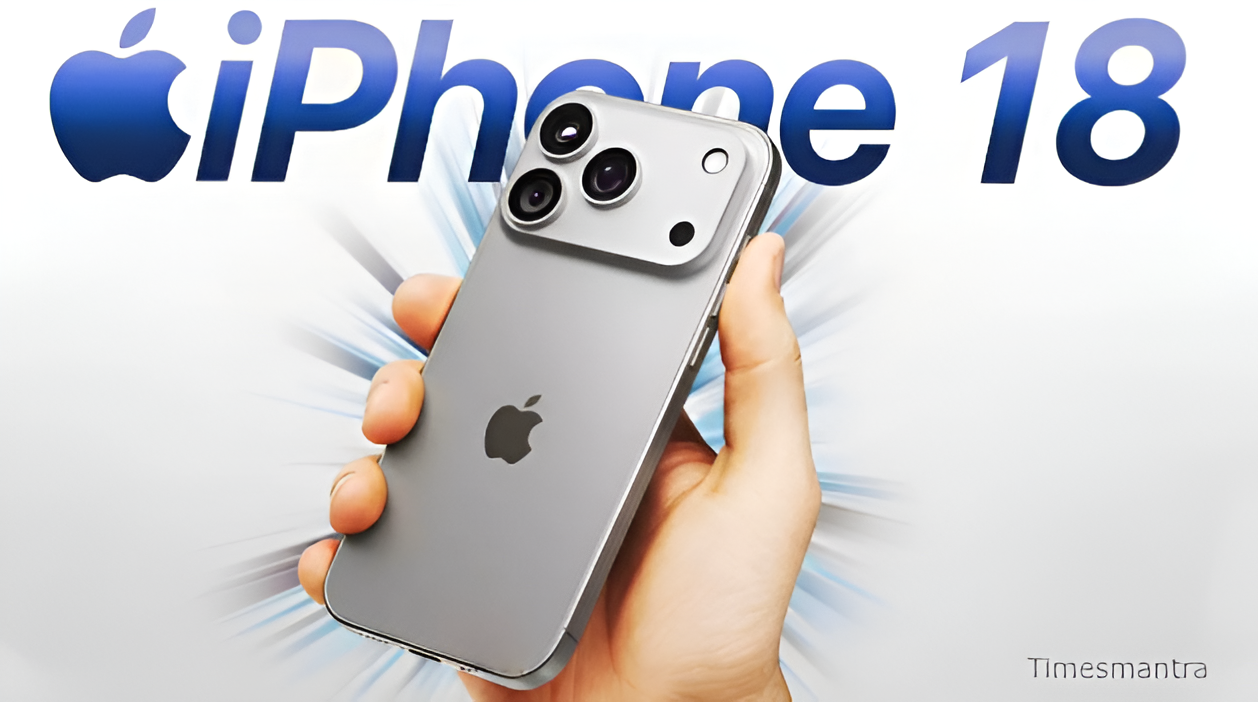
Apple iPhone 18 Pro Max Battery Leaks & Specs 2026
The iPhone 18 Pro Max — Apple’s flagship smartphone expected to launch in September 2026 — is already generating intense speculation around its battery performance. Multiple credible leaks from Asian supply chains, display analysts and former Apple engineers indicate that Apple is targeting the most substantial battery-capacity increase in Pro Max history while simultaneously improving efficiency through a combination of silicon and software advancements.
Early whispers suggest the iPhone 18 Pro Max could ship with a battery capacity in the 5,200–5,400 mAh range — a potential 18–23 % jump over the iPhone 17 Pro Max’s estimated 4,441–4,600 mAh cell (exact figure still unconfirmed). If accurate, this would mark the first time an iPhone Pro Max crosses the 5,000 mAh threshold in a non-foldable form factor.
Battery Capacity Leaks & Supply-Chain Signals
The most consistent figures circulating since late December 2025 come from three separate Chinese supply-chain accounts:
- Battery cell dimensions shared on Weibo (January 2026) point to ≈5,280 mAh
- A component-level teardown photo posted by a Shenzhen-based accessory maker (February 2026) shows a noticeably thicker battery footprint compared to iPhone 17 Pro Max dummies
- A mid-tier analyst report from Korea (February 2026) claims Apple has locked in orders for 5,300–5,350 mAh silicon-anode cells from two suppliers: one domestic Chinese vendor and one Korean partner
Silicon-dominant anodes are the key enabler. Unlike conventional graphite-dominant anodes used in most smartphones (including iPhone 16 & 17 series), silicon can store up to 10× more lithium ions. Apple is reportedly adopting a silicon-carbon composite anode with ≈15–20 % silicon content — enough to deliver a meaningful capacity boost without the cycle-life degradation that has historically plagued pure-silicon designs.
Efficiency Gains Beyond Raw Capacity
Even if the final capacity lands closer to 5,100–5,200 mAh, real-world battery life is expected to improve significantly thanks to several architectural changes:
- A20 chip (3 nm-class, TSMC N2P process) — expected 12–15 % better power efficiency vs A19 Pro
- New LPDDR5X / LPDDR6 DRAM — lower standby power draw
- LTPO 3.0 or LTPO 4.0 OLED panel — improved variable refresh-rate algorithm and lower off-state leakage
- Next-generation thermal architecture — rumored graphene + vapor-chamber cooling stack that reduces throttling and therefore power spikes
- iOS 20 power-management enhancements — deeper background-task scheduling, smarter Always-On Display algorithms, new “Adaptive Power Mode”
Combined, these improvements are projected to deliver 20–28 % better battery life in mixed usage compared with the iPhone 17 Pro Max, even if raw capacity increases only 15 %.
Charging Speed Rumours
While Apple has been conservative with wired charging speeds, 2026 leaks point to incremental progress:
- Wired charging likely rises from 25–27 W (iPhone 17 Pro Max) to 35–40 W
- MagSafe wireless charging expected to reach 30 W (up from 25 W)
- First-ever reverse wireless charging (7.5–10 W) confirmed by multiple accessory makers who claim to have received MagSafe-compatible coils with bidirectional capability
No evidence yet of 65 W+ wired speeds or Qi2 50 W wireless charging.
Design & Thickness Trade-Offs
The larger battery has forced compromises elsewhere:
- Device thickness projected at 8.4–8.6 mm (vs 8.25 mm on iPhone 17 Pro Max)
- Weight increase of ≈18–22 grams (estimated 245–252 g)
- Camera bump expected to grow slightly to accommodate new periscope telephoto module
Despite the added bulk, Apple is reportedly using new high-density silicon-anode cells and optimised stacking to keep the overall volume increase minimal.
Expected Real-World Battery Life
Early simulation models and supply-chain power-consumption estimates suggest:
- Video playback (local 4K HDR): 32–35 hours
- Mixed usage (social media, browsing, camera, gaming): 14–16 hours screen-on time
- Gaming (Genshin Impact, Resident Evil 4 max settings): 8.5–10 hours
- Always-On Display impact reduced by ≈25 % vs iPhone 17 series
These figures would position the iPhone 18 Pro Max as the longest-lasting iPhone ever produced, potentially surpassing even some Android flagships that use 6,000+ mAh cells.
Competitive Context
Apple’s battery push comes as Android competitors prepare even larger cells:
- Samsung Galaxy S26 Ultra: rumoured 5,800–6,000 mAh
- Xiaomi 16 Ultra: expected 6,100–6,300 mAh
- OnePlus 14 Pro: projected 6,000 mAh + 100 W wired charging
Apple is betting that software-hardware co-optimisation, thermal management and ecosystem integration will deliver superior real-world endurance despite a smaller cell.
Conclusion
The iPhone 18 Pro Max battery story in early 2026 is one of measured ambition rather than headline-grabbing excess. A 5,200–5,400 mAh silicon-anode cell, combined with A20 efficiency gains, LTPO 4.0 display improvements and aggressive power-management software, positions Apple to deliver the best battery life in iPhone history — potentially 20–28 % better than the iPhone 17 Pro Max in real-world mixed usage.
While charging speeds remain evolutionary rather than revolutionary, the overall package — larger capacity, smarter silicon, better thermal design and iOS optimisation — should make the iPhone 18 Pro Max the clear endurance leader among 2026 flagships.
Final specifications will only be confirmed at the September 2026 keynote, but current leaks paint a compelling picture: Apple is no longer content to trail Android in raw battery capacity — it is aiming to win on efficiency and real-world results.
 Admin
Admin