 By Krishna Dua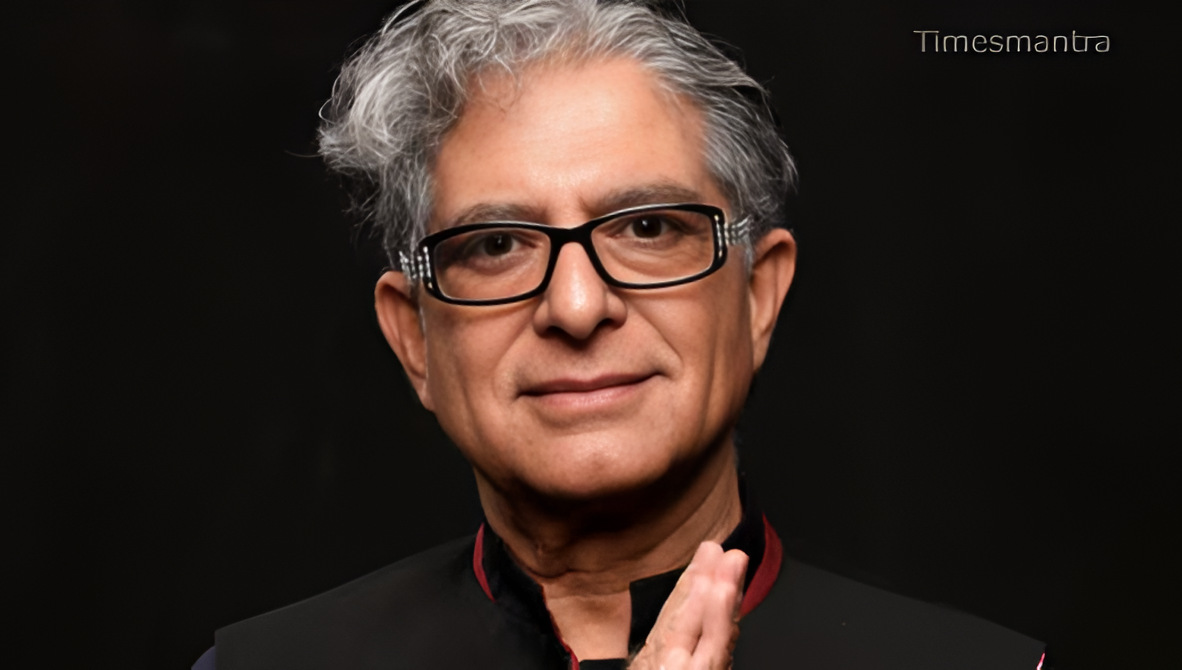
Deepak Chopra News: Health, Wellness and Mindfulness
Deepak Chopra, the 79-year-old Indian-American physician, bestselling author and leading voice in integrative medicine, continues to shape global conversations on health, consciousness, longevity and the intersection of ancient wisdom with modern science. In the opening weeks of 2026 Chopra has maintained a prolific output—new essays, podcast appearances, keynote addresses, research collaborations and public statements on artificial intelligence, mental health, aging and the future of healing. His influence remains undiminished: books sold exceed 20 million copies, the Chopra Foundation funds ongoing clinical studies, and his daily social-media posts reach more than 4.2 million followers across platforms.
This report covers Chopra’s most significant activities, messages and initiatives since late 2025, with emphasis on his evolving views on health, wellness and mindfulness in early 2026.
Chopra Foundation 2026 Programme Roadmap
On 15 January 2026 the Chopra Foundation published its annual priorities for the year. The organisation has committed $19 million in 2026 funding across four core pillars:
- Mind-body protocols for chronic pain, autoimmune disorders and long-COVID recovery
- Consciousness-based interventions for mental health, with special focus on youth anxiety and post-pandemic depression
- Longevity research combining Ayurveda, Vedic meditation and contemporary gerontology
- Ethical integration of artificial intelligence in healthcare, emphasising preservation of human empathy and intuition
The flagship initiative is the expanded Chopra Longevity Institute in Carlsbad, California. The new 14,000 sq ft clinical-research wing, opened in November 2025, is currently conducting a 350-participant trial that combines daily Vedic meditation (20 minutes twice daily), personalised Ayurvedic nutrition, weekly infrared-sauna sessions and intermittent fasting (16:8 protocol). Primary endpoints include change in telomere length, inflammatory markers (hs-CRP, IL-6, TNF-α), biological age (via epigenetic clocks) and validated quality-of-life scores.
Interim six-month data presented at the foundation’s January symposium showed:
- Average 19 % reduction in hs-CRP
- 14 % improvement in telomere maintenance
- 11 % reduction in biological age acceleration
- 15 % increase in self-reported life satisfaction
The study continues through mid-2027.
Key Public Statements and Media Appearances (December 2025 – January 2026)
Chopra has been highly visible in media and public forums:
- Huberman Lab Podcast (12 December 2025) In a three-hour discussion with neuroscientist Andrew Huberman, Chopra argued that consciousness is the primary reality from which biology emerges. He presented recent studies on meditators showing changes in default-mode network connectivity, gamma-wave coherence and gene expression related to inflammation and longevity. The episode has surpassed 11 million views.
- World Economic Forum Davos Panel (23 January 2026) On the panel “Longevity in the Age of AI”, Chopra warned against transhumanist ambitions that ignore inner well-being: “Extending lifespan to 120 years means nothing if those extra decades are filled with isolation, regret and absence of meaning. True longevity is measured in vitality, connection and purpose, not merely calendar age.”
- Gates Foundation Virtual Roundtable (18 January 2026) Invited by Bill Gates to speak on integrative mental-health strategies for low-resource settings, Chopra advocated combining evidence-based mindfulness programs with conventional therapy. He cited a 2025 meta-analysis showing mindfulness-based interventions reduced depression symptoms by 38–46 % in community settings in India, Kenya and Brazil.
- Op-Ed in The Indian Express (26 January 2026) Titled “Ayurveda, AI and the Future of Preventive Medicine”, Chopra urged India to become the global hub for rigorous integrative-medicine research. He called for large-scale randomised trials on Ayurvedic protocols for metabolic syndrome, stress-related disorders and healthy aging.
Core Views on Health, Wellness and Mindfulness in 2026
Chopra’s current framework blends continuity with refinement:
- Consciousness-first model — He continues to assert that consciousness is fundamental rather than an emergent property of brain activity. He frequently references the “hard problem of consciousness” and recent studies on meditators showing non-local correlations in brain activity.
- Daily Vedic meditation — Chopra recommends 20 minutes twice daily as the cornerstone practice for reducing stress hormones, improving epigenetic markers and enhancing coherence between heart and brain rhythms.
- Seven pillars of longevity — Meditation, purposeful movement (yoga/walking), predominantly plant-based nutrition, restorative sleep, meaningful relationships, sense of purpose and periodic fasting/autophagy support.
- AI & empathy — He warns that AI can diagnose and treat but cannot replace the healing effect of human presence, intention and empathy. He advocates for “conscious AI” that is trained to recognise and preserve emotional nuance.
- Critique of reductionism — Chopra argues that conventional medicine excels at acute care but struggles with chronic lifestyle diseases because it separates mind from body and meaning from biology.
Reception and Ongoing Debate
Chopra’s work remains deeply polarising. Supporters credit him with making contemplative practices mainstream, fostering dialogue between science and spirituality, and democratising wellness tools. Critics—particularly in evidence-based-medicine communities—accuse him of over-interpreting preliminary studies, promoting interventions with limited rigorous evidence, and sometimes blurring the line between science and metaphysics.
In January 2026 a group of 16 Indian-origin scientists (including two Padma awardees) published an open letter in Current Science expressing concern over “the uncritical popularisation of Ayurvedic and consciousness-based interventions without large-scale phase-III evidence.” While the letter did not name Chopra directly, it referenced “high-profile advocates” who “risk blurring the boundary between hypothesis and proven therapy.”
Chopra responded on X: “Science advances through both bold hypotheses and rigorous testing. The Chopra Foundation is funding exactly those large-scale trials. Open inquiry, not dismissal, serves truth.”
Upcoming Projects and Events in 2026
- Chopra Global Summit — 15–17 May 2026 (hybrid, Carlsbad + virtual). Theme: “Consciousness, AI and the Future of Healing”.
- Wellness City Project — Chopra is advising a planned “Wellness City” near Hyderabad, India, integrating integrative-medicine clinics, research labs, retreat centres and AI-supported diagnostics. Groundbreaking expected late 2026.
- New Book — “Quantum Healing 2.0: Consciousness in the Age of AI” scheduled for September 2026 release.
- Speaking Tour — Confirmed appearances in London (March), Singapore (April), Dubai (June) and New York (September).
Conclusion
In early 2026 Deepak Chopra remains a prolific and polarising force. He continues to advocate for a consciousness-centred model of health, integrate ancient wisdom with modern science, warn against the dehumanising potential of unchecked technology, and fund research that seeks to measure the immeasurable. Whether one views him as a visionary who has expanded humanity’s understanding of wellness or as a charismatic populariser of unproven ideas, his impact on how millions approach mind, body, aging and healing is profound and enduring.
As the world navigates accelerating technological change, rising chronic disease and growing mental-health challenges, Chopra’s central message in 2026 is unchanged: true well-being arises not merely from fixing the body, but from awakening the awareness that animates it.