 By Krishna Dua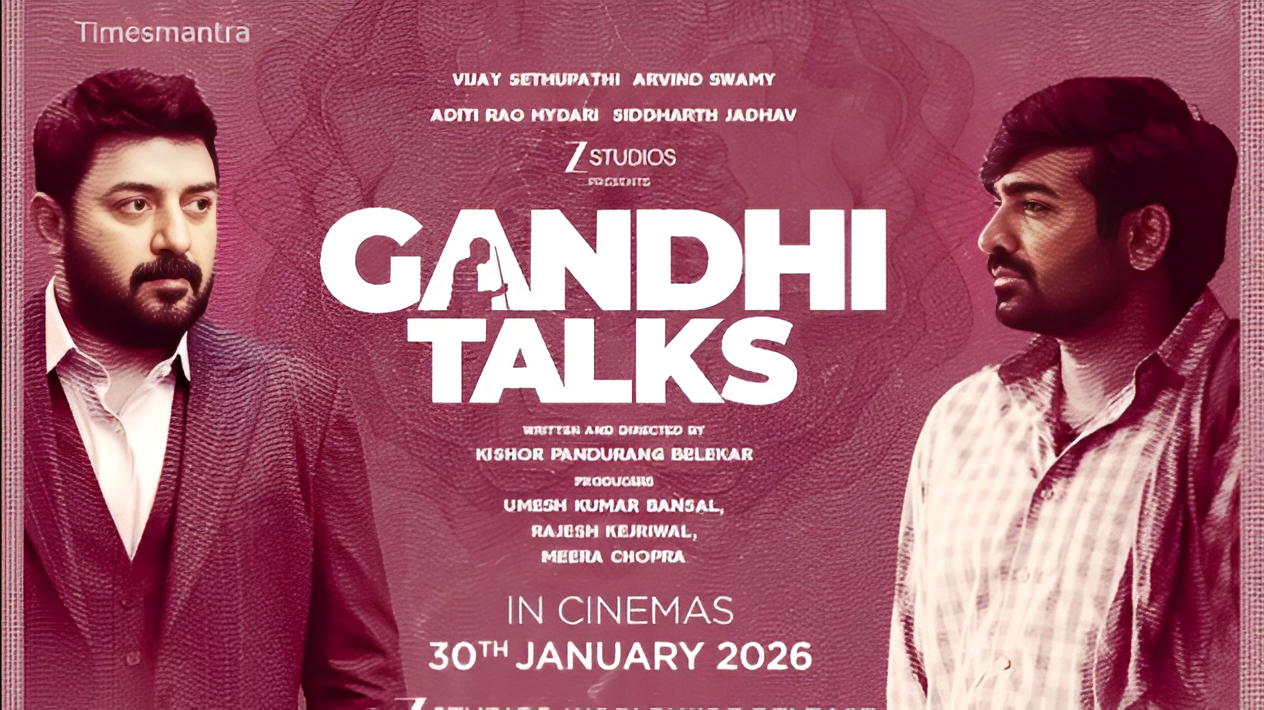
Gandhi Meets Vijay Sethupathi: Key Talks and Reactions
On 30 January 2026—Mahatma Gandhi’s death anniversary—Congress leader Rahul Gandhi held an extraordinary 90-minute public conversation with acclaimed actor Vijay Sethupathi at the Constitution Club of India in New Delhi. Billed simply as “Gandhi Talks”, the dialogue was live-streamed on the Congress YouTube channel, Sethupathi’s Instagram and multiple regional news platforms, attracting a peak concurrent viewership of over 4.8 million and surpassing 22 million total views within 24 hours. Moderated by senior journalist Barkha Dutt, the exchange deliberately avoided conventional political point-scoring and instead focused on philosophy, personal values, societal fractures and the relevance of Gandhian ideals in contemporary India.
The timing—exactly 78 years after Gandhi’s assassination—was intentional. Both participants later explained that they wanted the conversation to serve as a quiet counterpoint to the noise of partisan debates and social-media outrage cycles. What emerged was a rare, reflective exchange between a career politician and a film star who has deliberately stayed away from partisan politics, yet whose on-screen roles have often grappled with caste, class, morality and power.
Setting and Ground Rules
The venue was kept low-key: a simple hall with a backdrop showing the spinning wheel (charkha) and the Preamble of the Constitution. No party flags, no cheering crowds, no prepared speeches. Sethupathi insisted on two conditions before agreeing: no script and no direct attack on any political party or leader. Rahul Gandhi accepted both terms. The conversation was unscripted and unedited in the final stream.
Core Themes Discussed
1. The Fading Practice of Ahimsa and Satya
Rahul Gandhi began by asking why Sethupathi felt Gandhi’s principles were increasingly treated as “museum pieces”. The actor replied:
“Gandhi was inconvenient. He demanded truth even when it hurt his own followers. Today truth is negotiable; it depends on which side you’re on. We want heroes who are perfect, not humans who struggle. That’s why Gandhi feels far away.”
Gandhi agreed, saying the biggest danger in 2026 is “the normalisation of lying as strategy” in public life and the replacement of dialogue with demonisation.
2. Caste, Cinema and Social Responsibility
One of the most shared segments came when Sethupathi spoke openly about caste in the film industry:
“I’ve played every kind of character, but even today people ask me ‘which caste are you from?’ before they ask about the role. The casting couch is still partly a caste couch in many places. We make films about equality but the industry hasn’t fully practised it.”
Rahul Gandhi acknowledged that political parties—including Congress—have also failed to eradicate caste hierarchies. He spoke about the need for a caste census “not to divide, but to deliver justice” and admitted that reservation policies alone are not enough without economic empowerment and social reform.
3. Economic Inequality and the Dignity of Labour
Sethupathi narrated real-life stories from film sets—light-men, spot-boys and junior artists working 18-hour shifts without complaint. He said:
“We call them ‘supporting crew’ but they carry the film on their shoulders. Politicians call voters ‘vote banks’ but forget they are citizens who labour every day.”
Rahul Gandhi cited statistics from the Congress’s Bharat Jodo Nyay Yatra: 75–80% of new jobs created since 2019 are low-paying gig or contract roles. He called for a renewed focus on “dignity of labour” and criticised the “jobless growth” model.
4. Youth Disillusionment, Mental Health and Hope
Sethupathi shared that he has spoken publicly about anxiety and depression since 2023 and receives hundreds of messages from young fans feeling hopeless. “They see success stories but not the failures, the breakdowns, the therapy sessions. We need to normalise asking for help.”
Rahul Gandhi revealed that he had sought counselling during the most difficult periods of his political life. He announced that the Congress would launch a national youth mental-health helpline in partnership with NGOs by August 2026.
5. The Idea of India Today
In the closing segment Rahul Gandhi asked: “Do you still believe in the idea of India?” Sethupathi paused for nearly 20 seconds before answering:
“Yes, but it’s wounded. The idea was never about one religion, one language, one party. It was about argument, about listening, about living with difference. We are forgetting how to disagree without hating.”
Rahul Gandhi ended with: “If we lose the ability to talk like this, we lose the republic.”
Immediate Reactions and Social-Media Impact
The conversation became the most shared political content of the month within hours. Key trends:
- #GandhiTalks and #VijaySethupathi crossed 6 million combined posts in 24 hours.
- Positive reactions: “Finally adults talking without abusing each other” (most retweeted comment); “This is what opposition should look like—ideas, not insults”; “Vijay Sethupathi for Lok Sabha 2029” (half-serious trend).
- Critical reactions: BJP handles labelled it “scripted PR” and “borrowed clean image”; some left commentators felt Rahul Gandhi “did not challenge economic policy failures strongly enough”.
Mainstream media coverage was largely positive but divided along predictable lines: NDTV, The Wire and The Quint praised the “mature dialogue”; Republic Bharat, Times Now and Zee News ran segments questioning the timing and calling it “sympathy politics”.
Political Aftermath
The Congress has already repurposed short clips for its social-media campaigns in Tamil Nadu, Kerala, Karnataka and Andhra Pradesh—states where Sethupathi enjoys huge popularity. The DMK invited the actor to campaign in the April 2026 local-body elections in Tamil Nadu.
For Rahul Gandhi the conversation helped soften his image among younger, urban, apolitical viewers who often perceive him as combative. For Vijay Sethupathi it elevated his public standing beyond cinema; he is now increasingly seen as a thoughtful, non-partisan voice.
On 30 January evening Prime Minister Narendra Modi, speaking at a BJP workers’ meeting in Gujarat, did not name either Gandhi or Sethupathi but said: “Some people sit in air-conditioned rooms and talk about India. We work on the ground to build India.”
Cultural & Symbolic Resonance
The choice of 30 January for the conversation was deliberate and powerful. It allowed both participants to invoke Gandhi’s martyrdom while discussing the betrayal of his ideals in modern politics. The absence of party flags, slogans and cheering crowds made the setting feel more like a public confessional than a rally.
Many commentators described it as “the most adult political conversation on Indian social media in recent years”. Whether it translates into electoral capital or remains a one-off cultural moment is still unfolding, but for one evening two Indians—one a career politician, the other a film star—demonstrated that listening is still possible even in deeply polarised times.